
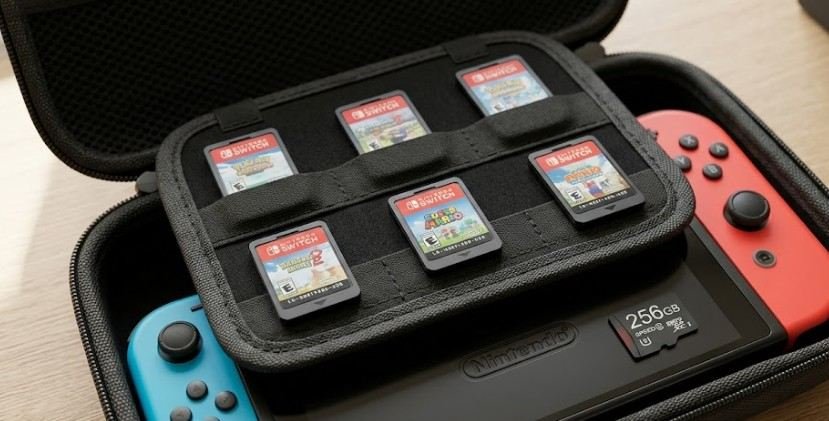
Preservation vs. Piracy: What You Actually Need to Know About Nintendo Switch ROMs
In early 2024, the video game preservation landscape shifted forever when a single high-profile legal settlement forced the shutdown of Yuzu, the world’s premier Nintendo Switch emulator. That single enforcement action wiped out years of open-source development overnight, sending shockwaves through the emulation community and leaving millions of retro enthusiasts scrambling for answers.
Navigating the world of nintendo switch roms requires separating legal technicalities from internet myth. Whether you are curious about digital preservation, software formats, or hardware mods, understanding how game backups function is the first step toward keeping your personal digital library safe and legal.
Decoding Nintendo Switch ROMs: File Formats Explained
When video game cartridges are digitized, they are transformed into precise data archives commonly referred to as ROMs (Read-Only Memory) or digital image files. Unlike standard media files, these formats interact directly with system keys and custom firmware.
The three primary file formats used across the ecosystem include:
- NSP (Nintendo Submission Package): This is the exact digital file format used by Nintendo on the eShop. If you buy a digital game, downloadable content (DLC), or game update, it lands on your console as an NSP.
- XCI (NX Card Image): This format represents a raw digital copy extracted directly from a physical retail cartridge. It mirrors the exact layout of the physical card, including internal storage partitions.
- NSZ and XCZ: Storage space fills up quickly on SD cards. NSZ and XCZ files are heavily compressed variants of NSP and XCI formats. They use lossless compression algorithms to reduce overall file sizes by up to 50% without altering core game code.
To better understand how these formats stack up, here is a quick breakdown:
| Format | Primary Source | Typical Use Case | Compression Status |
| NSP | Official eShop Downloads | Digital games, updates, & DLC | Standard / Uncompressed |
| XCI | Physical Retail Cartridges | Archiving physical game cards | Raw Image File |
| NSZ / XCZ | Compressed NSP or XCI | Saving local storage space | Lossless Compression |
The Legal Reality and Modern Emulation Landscape
To understand why game archives cause such heated debates, it helps to review basic copyright principles. According to the U.S. Copyright Office, creating a duplicate copy of copyrighted software is legally restricted unless explicitly permitted under narrow exceptions, such as archival fair use.
Downloading pre-packaged nintendo switch roms from public web portals is copyright infringement. Nintendo aggressively protects its intellectual property by issuing mass DMCA takedowns and pursuing multi-million dollar lawsuits against commercial ROM distribution hubs.
Beyond the legal hazards, public download sites represent a major cybersecurity risk. Independent security reports frequently highlight how unofficial game downloads hide malicious code, trojans, and phishing software within fake installer packages.
The software tools used to run these files have also seen massive disruption:
- Yuzu and Ryujinx: For years, these two platforms led modern console emulation. However, legal settlements and enforcement actions led to the abrupt shutdown of both projects and their online repositories.
- Skyline and Forks: Mobile emulation projects faced similar fates, with developers voluntarily closing projects to avoid potential liability.
- RetroArch: While multi-system frontends like RetroArch remain popular, they are primarily designed to emulate legacy retro systems rather than modern, active-market hardware like the Switch.
Legitimate Acquisition: How Self-Dumping Works
The only legally sound way to maintain a digital backup of a game you own is through a process called “self-dumping.” This involves extracting the raw game data directly from your own physical cartridge or eShop account onto your own personal hardware.
For academic research into how open-source communities approach file extraction and digital preservation, you can explore public software repositories on GitHub.
Here is a step-by-step framework of how enthusiasts dump their owned media:
- Hardware Audit: Verify whether your personal console is compatible with custom firmware (CFW). Older “V1” unpatched consoles allow payload injection, whereas newer V2, Lite, or OLED models require specialized hardware modifications.
- Environment Setup: Install an open-source custom environment, such as Atmosphere, onto a formatted microSD card.
- Homebrew Extraction Tools: Load specialized software utilities like NX Dump Tool through the console’s homebrew menu.
- Data Extraction: Insert your physical cartridge or target your purchased eShop library. Run the utility to extract the keys and file structure, converting the data into a clean XCI or NSP backup stored locally on your SD card.
Why Digital Preservation Matters in Real Life
Why do enthusiasts go through all this trouble? The core issue comes down to digital ownership and game preservation.
When digital storefronts close—like the Wii U and 3DS eShops did recently—hundreds of digital-only titles vanish overnight. Physical game cards can suffer from component degradation, chip failure, or accidental damage. Self-dumping allows game collectors to protect their financial investments and preserve their personal gaming history before physical media breaks down or servers go offline.
Limitations and Common Misconceptions
When exploring backup formats and hardware modifications, several common misunderstandings often cause confusion:
- Misconception 1: “Owning a physical cartridge makes downloading a ROM legal.”
Reality: Copyright law protects specific digital instances. Downloading a file from an unauthorized third party is still illegal, even if you own a physical copy sitting on your shelf.
- Misconception 2: “Emulators themselves are illegal.”
Reality: Emulators are simply software engines. Writing code to mimic hardware is legal under U.S. law. Legal issues arise only when emulators incorporate proprietary cryptographic keys or copyrighted console firmware without permission.
- Misconception 3: “Modded consoles can play online safely.”
Reality: Running modified software while connected to official servers carries a massive risk of a permanent hardware ban from Nintendo Network services.
Frequently Asked Questions
1. Is downloading ROMs legal if I already own the physical game?
No. U.S. copyright law does not grant permission to download duplicate files from third-party websites. Legitimate backing up requires extracting the data directly from your own personal hardware and media.
2. What is the difference between NSP and XCI files?
NSP files originate from digital eShop downloads, updates, and DLC packages. XCI files are digital images extracted directly from physical retail game cartridges.
3. Can emulators infect my computer with malware?
Official emulator engines are safe, but downloading pre-packaged ROM files or modified emulator binaries from sketchy third-party websites carries a high risk of hidden malware, spyware, and trojans.
4. Why did popular Switch emulators close down?
Major emulator projects were shut down following legal actions and copyright lawsuits brought by Nintendo over concerns regarding anti-circumvention tools and online piracy enablement.
Conclusion
Understanding nintendo switch roms ultimately boils down to respecting the balance between copyright law and digital preservation. While the desire to safeguard your personal media library is understandable, using public download hubs exposes you to legal liabilities and major security threats. The safest path forward will always be preserving your own legally purchased media through legitimate self-dumping practices. Keep your devices secure, stick to legal backup methods, and treat your digital collection with the care it deserves.

Related Posts
Cyberbackgroundchecks Exposed: How Your Private Life Ended Up Online and How to Scrub It

Mastering MyKaty Cloud: The Ultimate Access & Security Guide for Katy ISD Families