Understanding Cognitive and Language Growth in Ages 3-5
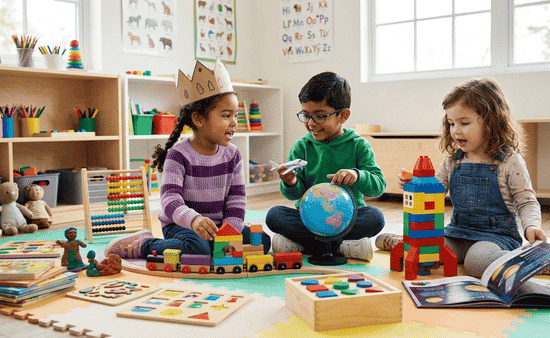
The preschool years bring an explosion of curiosity, chatter, and creativity. Between the ages of three and five, children transition from toddlers figuring out how to walk and talk into little explorers who constantly ask questions about how the world works. They start to form complex sentences, remember past events, and engage in vivid imaginative play.
Cognitive Development in Ages 3-5
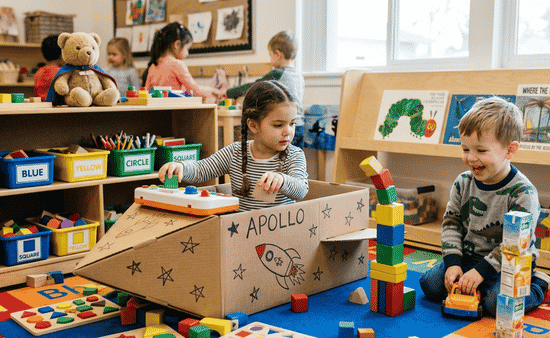
During the preschool years, a child’s brain is making rapid connections. They are learning to process information, solve problems, and understand their surroundings in entirely new ways.
Piaget’s preoperational stage and its characteristics
According to psychologist Jean Piaget, children aged three to five are in the preoperational stage of cognitive development. One of the main features of this stage is symbolic thought. Children begin to use objects to represent other things, which is why a simple cardboard box easily becomes a spaceship or a racecar during pretend play.
At this age, children also display egocentrism. This does not mean they are selfish; rather, they struggle to see situations from another person’s perspective. You might also notice animism, where a child believes their stuffed animals or toys have feelings and intentions just like they do.
Memory and attention span development
Memory capacity grows significantly during these years. Preschoolers begin to develop better short-term memory, allowing them to follow multi-step instructions like, “Please pick up your shoes and put them in the closet.” Their long-term memory also improves, helping them recall past family trips or favorite stories.
Attention spans naturally increase, though they are still relatively short. You can improve a child’s attention span by breaking tasks into smaller, manageable chunks and using engaging, hands-on activities to keep their interest focused.
Problem-solving skills and critical thinking
Ages three to five are prime years for developing early problem-solving skills. Children begin to enjoy simple puzzles and classification tasks, such as sorting blocks by color or shape. Encouraging inquiry and exploration allows them to test hypotheses. When they build a tower of blocks that falls over, they are learning about balance and gravity, adjusting their strategy on the next attempt.
Language Development in Ages 3-5
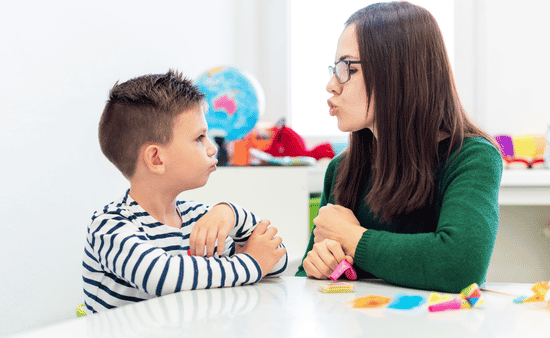
Language skills blossom during the preschool years. Children move from pointing and using single words to expressing complex thoughts and feelings.
Vocabulary expansion and sentence structure
Preschoolers experience a rapid word acquisition phase often referred to as a “vocabulary explosion.” They absorb new words daily from their environment. Along with a growing vocabulary, they begin forming complex sentences. Instead of saying “Want juice,” a four-year-old might say, “Can I please have some apple juice in my red cup?”
Phonological awareness and early literacy skills
Before children learn to read, they must develop phonological awareness, which is the ability to recognize and play with sounds in spoken language. Rhyming games and alliteration (like “Peter Piper picked a pepper”) are highly effective at this age. Children also begin to master letter recognition and understand sound-symbol correspondence, realizing that the letter “B” makes a specific sound.
Pragmatic language skills
Pragmatics refers to the social use of language. As children interact more with peers and adults, they learn the rules of conversation. They practice taking conversational turns, staying on topic, and using appropriate greetings. They also become better at understanding and using non-verbal cues, such as maintaining eye contact and interpreting facial expressions.
Supporting Cognitive and Language Development at Home

Parents and caregivers play a crucial role in shaping a child’s early development through everyday interactions.
Engaging in interactive play and storytelling
Play is the work of childhood. Engaging in interactive play helps children practice problem-solving and social skills. Storytelling, whether reading from a book or making up tales together, boosts imagination and vocabulary.
Reading aloud and encouraging emergent literacy
Reading aloud is one of the most effective ways to promote early literacy. Point out words on the page, ask questions about the story, and encourage your child to predict what might happen next. This keeps them actively engaged and builds comprehension skills.
Providing opportunities for open-ended exploration
Supply materials that can be used in multiple ways, such as clay, building blocks, or blank paper and crayons. Open-ended exploration encourages creativity and independent thinking, allowing children to guide their own learning.
The role of conversations and asking questions
Have real conversations with your child. Ask open-ended questions like, “What was your favorite part of the park today?” instead of simple yes-or-no questions. This requires them to think about their answers and practice retrieving words to express their thoughts.
The Impact of Environment and Activities
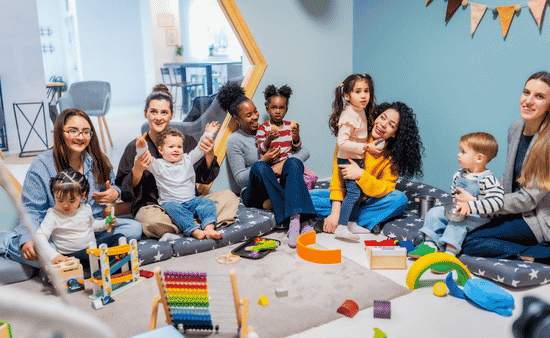
A child’s surroundings heavily influence their developmental progress. Diverse environments offer unique learning opportunities.
Preschool and educational settings
Structured educational environments provide consistent routines and peer interactions. Whether you are looking for local preschool programs or reliable childcare in Taylorsville, a high-quality educational setting offers activities specifically designed to challenge a child’s growing mind and foster social-emotional skills.
Outdoor play and nature exploration
Nature is a magnificent classroom. Outdoor play encourages physical development and provides endless cognitive challenges. Examining bugs, collecting leaves, and navigating playground equipment all require a child to observe, analyze, and problem-solve.
Creative arts and music
Music and arts are fantastic tools for brain development. Singing songs helps with memory and phonological awareness, while drawing and painting refine fine motor skills and allow children to express complex emotions visually.
Recognizing Developmental Delays and Seeking Support
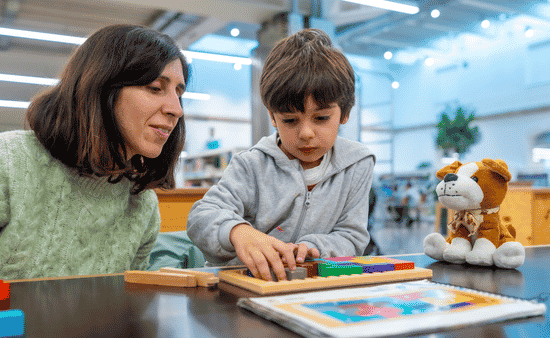
While every child develops at their own pace, it is helpful to know the signs of potential developmental delays.
Common signs of cognitive or language delays
Warning signs might include a child not speaking in sentences by age four, struggling to follow simple instructions, or showing no interest in interactive games or pretend play. A noticeable loss of skills they previously mastered is also a reason to pay closer attention.
When to consult a pediatrician or specialist
If you have concerns about your child’s milestones, trust your instincts. Bring these concerns to your pediatrician during a routine check-up. They can provide professional guidance and determine if an evaluation by a speech-language pathologist or child psychologist is necessary.
Resources for early intervention
Conclusion
The years between three and five are a period of immense growth, setting the stage for a child’s future academic and social success. By understanding the milestones of cognitive and language development, you can provide the right balance of guidance, play, and exploration.