

5 Warning Signs Your Rental’s Waste Vault Is Nearing Capacity
Managing a rental property, vacation cabin, or remote site with a waste holding vault requires careful planning. Unlike properties tied to city sewers or traditional septic drainfields, a waste vault is an entirely sealed tank. Every gallon of wastewater stays inside until a vacuum truck pumps it out.
Because waste vaults lack an outlet, capacity is finite. When a vault reaches its limit, wastewater has nowhere to go except back into indoor fixtures. For property managers and hosts, an overflowing vault causes ruined flooring, refunds, expensive cleanup, and bad reviews. Recognizing early warning signs allows owners to schedule pumping before wastewater breaches living spaces. Here are five critical signs your rental’s waste vault is nearing capacity.
1. Sluggish Drains and Gurgling Fixture Basins
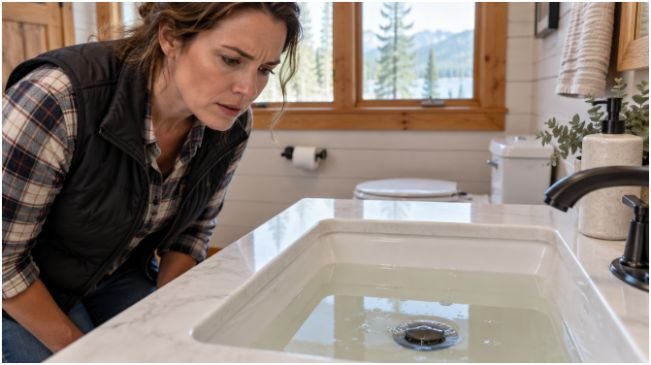
The quick answer: When wastewater submerges the tank’s inlet pipe, trapped air cannot vent through normal plumbing stacks, causing drains to slow down and toilets to gurgle.
One of the earliest signs appears at indoor fixtures. If sinks, tubs, and showers throughout the house drain sluggishly at once, the issue is rarely a simple pipe clog.
As sewage rises to cover the tank’s inlet pipe, internal air cannot vent freely. Incoming wastewater meets resistance from trapped air, forcing bubbles back through P-traps and toilet bowls. This backpressure creates distinct drain line gurgling sounds. If flushing a toilet causes bubbling in an adjacent shower drain, the vault’s intake is submerged and capacity is critical.
2. Strong Sewer Odors Indoors and Near the Riser Lid
The quick answer: High sewage levels block internal vent lines, forcing concentrated hydrogen sulfide gas past dry P-traps, wax toilet rings, and outdoor riser gaskets.
A functioning holding tank vents odors through the roof plumbing stack. When wastewater fills the chamber, liquid blocks vent lines, trapping sewer gas under pressure.
These gases escape through the path of least resistance. Guests may notice a persistent sulfur smell near bathrooms, laundry rooms, or floor drains. Outside, odors lingering near the ground-level access hatch indicate internal pressure is pushing vapor past lid seals. Masking these smells with fresheners ignores standard property maintenance tips and overlooks an urgent warning that tank pumping is already overdue.
3. High-Water Float Switch Activation and Alarm Panels
The quick answer: An active visual strobe or audible alarm indicates the liquid level has reached the upper 10% reserve capacity of the vault.
Most permitted holding vaults feature high-water float switches wired to an external alarm box. When rising wastewater lifts the float, it triggers a warning strobe, an audible buzzer, or a notification on your phone.
Common Mistake to Avoid: Never silence or bypass an active alarm without scheduling service immediately. Some hosts silence buzzers to avoid disturbing guests, assuming days of buffer remain. In reality, float switches trigger when only 10% to 15% of emergency reserve is left—often representing less than 24 hours of normal water usage.
4. Spongy Soil and Moisture Pooling Near the Access Hatch
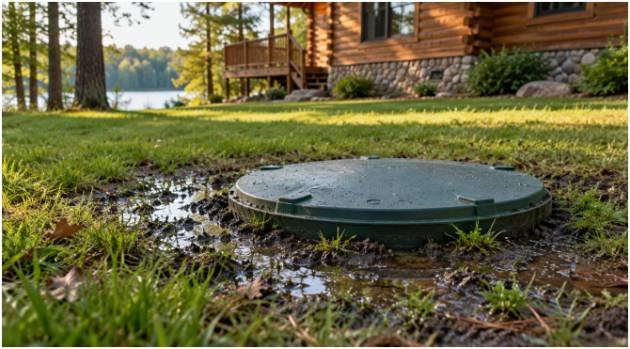
The quick answer: Soggy ground, pooling water, or unusually lush grass around the vault lid indicates wastewater is seeping through access seals under hydrostatic pressure.
Inspecting the ground around the buried vault provides clear clues about internal volume. If soil feels spongy underfoot or moisture pools around the riser lid during dry weather, wastewater has reached the top collar.
In aging concrete or poly vaults, hydrostatic pressure forces effluent through seam gaskets or hairline cracks. Once blackwater seeps into topsoil, it creates an environmental hazard and confirms the tank is at capacity.
5. Sewage Backing Up into Lowest-Level Drains
The quick answer: Wastewater seeping upward into basement showers, floor drains, or ground-level toilet bowls is the final physical indicator of a completely full vault.
Because water seeks its lowest point, an overflowing waste vault always backs up into lower fixtures first. In rentals with a basement or ground-floor suite, sewage seeps up through shower pans, tub drains, or floor lines.
At this stage, you face an active plumbing emergency. Shut off the main water valve immediately to stop guests from running taps or showers, which only adds volume to a flooded system.
Proactive Management: Preventing Disasters with Scheduled Pumping

The quick answer: Calculating water usage based on guest capacity and establishing scheduled pump-outs eliminates reliance on emergency service calls.
Managing a waste vault reactively is stressful and costly. Waiting for guests to report slow fixtures often means discovering an issue after damage has begun.
A reliable approach relies on consistent holding tank capacity monitoring. Estimate usage by multiplying guest capacity by 50 to 70 gallons per person daily. For cabins, rentals, and commercial sites in northern Utah, partnering with dependable septic tank pumpers in Salt Lake City ensures tanks are pumped routinely during turnover windows. Establishing a scheduled pumping agreement protects your property while avoiding the steep costs of emergency waste tank pumping.
Pre-Stay Waste Vault Inspection Checklist for Rental Hosts
Review this operational checklist between guest stays:
- Inspect Riser Lids: Verify that cover bolts are secure and gaskets remain intact.
- Test the Alarm: Press the “test” button on the float panel to confirm the horn and strobe operate.
- Audit Water Meters: Check meter logs to catch running toilets that can fill a vault in 48 hours.
- Check Drain Flow: Run sinks and flush toilets to confirm rapid drainage without gurgling.
- Review Pumping Logs: Match your last pump date with guest counts since the previous service.
Operating a rental on a waste vault requires respect for containment limits. Because vaults lack drainfields, ignoring operational warnings inevitably causes backups, guest refunds, and costly repairs. Watching for gurgling drains, testing high-water alarms, inspecting outdoor risers, and scheduling regular pump-outs keeps wastewater containment reliable, safe, and out of sight.