
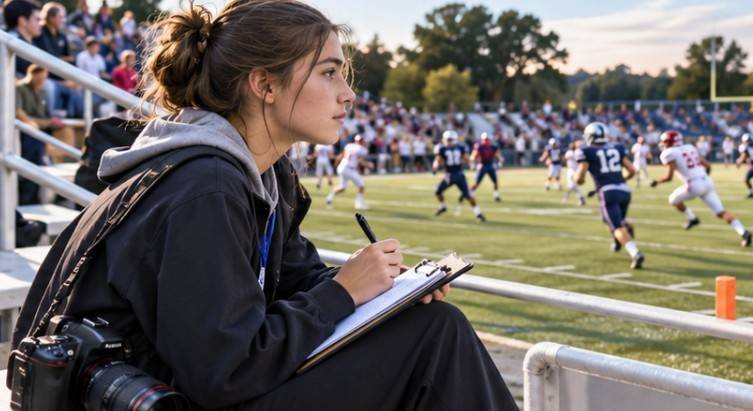
Sports Journalism High School Project: Ideas, Reporting Tips, and Real-World Skills
A basketball team loses its championship by one point. The scoreboard tells everyone the result, but it cannot explain the missed opportunity, the coach’s final decision, or the players’ reactions. That is where sports journalism begins.
A sports journalism high school project teaches students to investigate athletic events, interview credible sources, interpret statistics, and communicate meaningful stories. Whether students produce newspaper articles, podcasts, photo essays, or video reports, the goal extends beyond describing athletic competition.
These assignments strengthen research, critical thinking, media literacy, and communication skills while helping young reporters discover stories their school communities might otherwise overlook.
Why Sports Journalism Belongs in High School Education
Sports reporting provides an engaging introduction to professional journalism because students already understand the excitement surrounding school athletics.
However, effective reporting requires more than enthusiasm. Students must recognize newsworthy developments, investigate competing perspectives, and distinguish verified information from personal opinions.
The University of Missouri School of Journalism offers a 25-module journalism curriculum covering sports writing, interviewing, multimedia production, research, and journalism ethics.
This educational approach demonstrates how reporting assignments can connect classroom writing with real-world communication responsibilities.
Students also gain practical experience meeting deadlines, collaborating with editors, and presenting information accurately to audiences.
Creative Sports Journalism Project Ideas Worth Exploring
A successful assignment begins with a specific question rather than a general topic. The following approaches encourage original reporting while accommodating different experience levels.
1. Investigate the Stories Behind Athletic Facilities
School stadiums, gymnasiums, and athletic fields often carry names connected to former coaches, educators, or community leaders.
Students can investigate the history behind these landmarks through archived newspapers, school records, yearbooks, and interviews with longtime community members.
The finished feature might reveal how local sports traditions developed or why a particular individual received recognition.
2. Report on Underrepresented School Sports

Football and basketball frequently attract attention, but other athletic programs may have equally compelling stories.
Student reporters could investigate wrestling, swimming, cross-country, adaptive athletics, or club sports.
For example, an article might explore how a small team recruits participants, secures practice facilities, or balances competition with limited resources.
This approach expands coverage while introducing questions about equitable athletic opportunities.
3. Produce a Student-Athlete Profile
Athlete profiles examine experiences that statistics cannot fully explain.
Students might interview a swimmer managing demanding coursework, a team captain developing leadership skills, or an athlete returning after an injury.
Strong profiles combine firsthand interviews, observations, and supporting perspectives from coaches or teammates.
Avoid presenting medical details or personal struggles without appropriate permission and careful verification.
4. Investigate Participation Through Data
Sports statistics can reveal patterns that deserve further investigation.
Students might compare team participation across seasons, examine attendance trends, or investigate changes in athletic opportunities.
For example, reporters could analyze whether participation increased after a school introduced a new sports program.
However, a numerical change does not automatically establish its cause. Interviews and contextual information are necessary to explain the findings responsibly.
How to Complete a Sports Reporting Assignment
A structured reporting process helps students transform an interesting idea into a credible published story.
Step 1: Identify a Meaningful News Angle
Rather than reporting that a soccer team won five consecutive matches, investigate what changed during that winning streak.
Perhaps a different defensive strategy improved results, or younger players assumed important responsibilities.
A focused angle gives readers a reason to care beyond the final score.
Step 2: Research Before Conducting Interviews

Review previous game results, available statistics, team schedules, and relevant school announcements.
Create a short background document containing confirmed facts and unanswered questions.
This preparation prevents repetitive interviews and helps reporters recognize inaccurate claims.
Step 3: Ask Questions That Produce Detailed Answers
Effective interviews encourage sources to describe decisions, experiences, and consequences.
Useful questions include:
- What moment changed the direction of the game?
- Which challenge required the biggest adjustment?
- How did the team prepare differently this season?
- What would spectators misunderstand about your experience?
Interview coaches, athletes, and other relevant sources independently whenever possible.
Step 4: Verify Information and Draft the Story
Confirm names, scores, quotations, dates, and statistical claims before publication.
Open the article with its strongest verified development. Follow with supporting evidence, meaningful quotations, and necessary background.
A typical game report should explain what happened, why it mattered, and what comes next.
Step 5: Edit for Accuracy and Fairness
The Society of Professional Journalists Code of Ethics emphasizes verification, independence, accountability, and minimizing harm.
Students should apply these principles by checking factual claims, disclosing conflicts of interest, and correcting mistakes transparently.
A reporter who plays on the team being covered should discuss that connection with the editor before accepting the assignment.
Choosing the Right Storytelling Format
A sports journalism high school project does not need to become a conventional newspaper article.
Different formats offer distinct storytelling advantages.

Written Features and Game Reports
Written reporting works particularly well for detailed analysis, athlete profiles, and investigations requiring several sources.
Students practice headline writing, quotation selection, narrative structure, and factual accuracy.
Podcasts and Audio Interviews
Podcasts allow students to explore personal experiences through conversation and recorded sound.
A five-minute episode might examine how a student coach prepares athletes or how a team builds confidence following consecutive losses.
Clear audio, organized scripts, and careful editing matter more than expensive recording equipment.
Photo Essays and Video Packages
Photography captures movement, emotional reactions, and overlooked moments surrounding competition.
Video reporting combines interviews, action footage, narration, and visual evidence.
The USC Pre-College Multiplatform Sports Storytelling program illustrates how sports journalism education incorporates podcasting, television, photography, writing, and digital media production.
Students should choose formats according to their reporting goals, available equipment, and audience.
Common Reporting Mistakes Students Should Avoid
School sports journalism can become promotional writing when reporters focus exclusively on celebrating their favorite teams.
Journalists should distinguish supportive commentary from factual reporting and include relevant perspectives that challenge initial assumptions.
Privacy presents another concern. Publishing sensitive information about minors, including injuries or mental health experiences, requires particular care.
The National Scholastic Press Association’s ethics guidance identifies fairness, accuracy, independence, responsibility, and minimizing harm as essential student journalism principles.
Students should also follow school recording policies, obtain appropriate permissions, and avoid using copyrighted footage without authorization.
Finally, limited access to statistics should never encourage invented figures. A carefully reported story without numerical data is better than an impressive-looking article containing unsupported claims.
Frequently Asked Questions
1. What is the easiest sports journalism project for beginners?
A short game report is an accessible starting point. Students can observe one event, verify the result, interview a participant, and produce a 400-word article.
2. Can students complete sports journalism projects without playing sports?
Yes. Strong sports journalism depends on curiosity, research, interviewing, and accuracy rather than athletic ability or firsthand competitive experience.
3. What equipment is needed for a school sports podcast?
A smartphone, quiet recording environment, headphones, and basic audio-editing software are generally enough to produce a beginner podcast.
4. How should teachers grade sports journalism assignments?
Evaluate factual accuracy, source quality, ethical judgment, organization, and clarity. Production sophistication should not outweigh reliable reporting and thoughtful analysis.
Teach Students to Find the Story Beyond the Score
The greatest value of school sports reporting is not producing another championship recap. It is teaching students to recognize the people, decisions, and circumstances behind athletic outcomes.
A thoughtfully designed sports journalism high school project encourages young reporters to question assumptions, listen carefully, and support their observations with evidence.
Teachers can begin with one game, one interview, or one overlooked athletic program. Students can then develop more ambitious investigative or multimedia assignments as their confidence grows.
Ultimately, memorable sports journalism does more than celebrate victories. It helps communities understand why those moments matter and whose stories deserve attention.