Sports Technology Classroom Inquiry For Turning Athletic Data Into STEM Discoveries
A basketball shot can become a physics experiment, a sprint can reveal mathematical patterns, and a soccer game can introduce students to artificial intelligence. The equipment may look familiar, but the learning opportunities are surprisingly sophisticated.
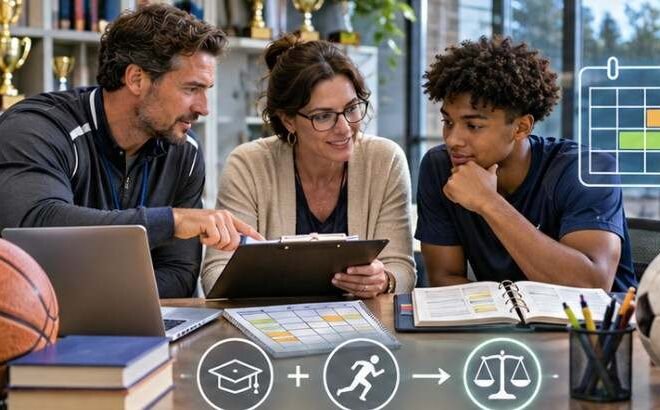
Sports technology classroom inquiry transforms everyday athletic activities into investigations where students collect evidence, test predictions, and solve problems. Instead of simply memorizing formulas, students discover how scientific principles explain movement, performance, and equipment design.
For American K–12 educators, this approach connects physical education with science, technology, engineering, and mathematics while developing analytical thinking that extends beyond the playing field.
Four Technologies That Turn Sports Into Investigations
1. Wearable Sensors Reveal Hidden Movement Patterns
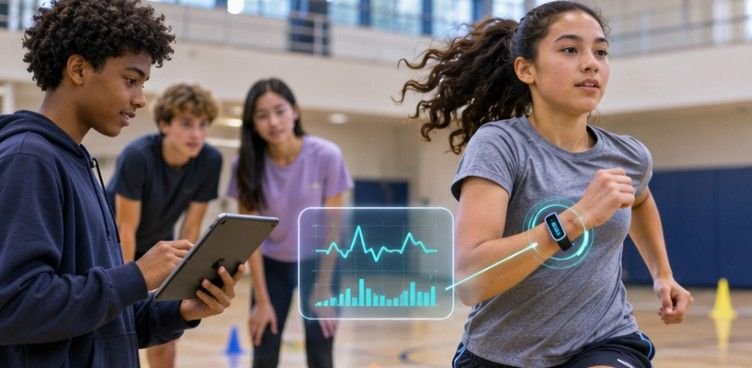
Accelerometers, pedometers, and GPS-enabled tracking equipment provide measurements that students can investigate.
An accelerometer detects changes in acceleration, while GPS devices estimate outdoor position and movement. Different sensors answer different questions.
Students might compare acceleration during walking and running or examine whether repeated movement trials produce consistent measurements.
Wearables also create opportunities to discuss measurement errors, sensor calibration, and the difference between estimated and directly measured values.
2. Video Analysis Makes Physics Visible
Slow-motion footage can reveal details that disappear during ordinary observation.
Students can examine a ball’s trajectory, compare running techniques, or estimate motion using video frames and a known distance scale.
The educational nonprofit Science Buddies demonstrates how basketball bank shots can introduce projectile motion and geometric relationships.
Students should recognize that simplified physics models may overlook spin, air resistance, and other real-world influences.
3. Digital Dashboards Strengthen Statistical Reasoning
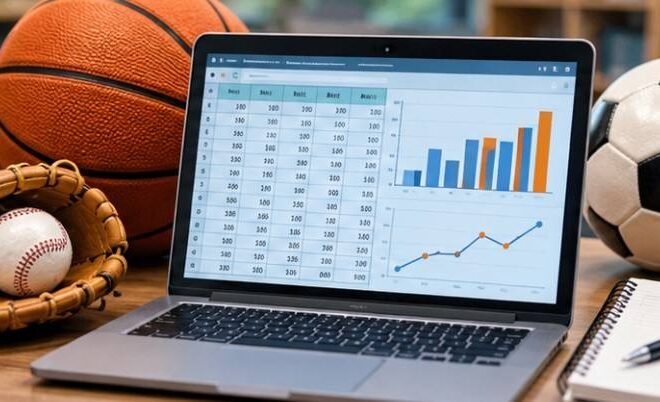
Collecting measurements is only the beginning. Graphing software helps students organize observations and identify meaningful patterns.
A spreadsheet can display sprint times, calculate averages, and compare experimental conditions.
Older students can estimate scoring probabilities using historical attempts. For example, 12 successful shots from 20 attempts produce an observed success rate of 60%.
That percentage describes the recorded sample; it does not guarantee future performance.
4. Robotics Introduces Engineering and Coding
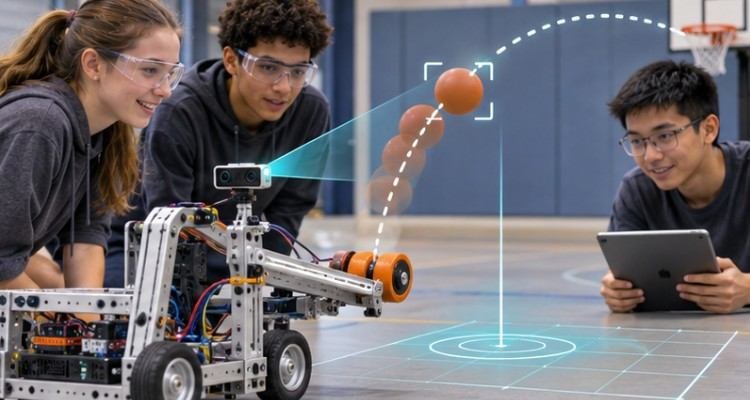
Robotic soccer and automated ball-tracking challenges extend sports investigations into programming and engineering.
Students can build small robots that detect obstacles, follow designated paths, or respond to sensor inputs.
These projects introduce feedback systems, motor control, computational logic, and mechanical design.
Programs such as STEM Sports Robotics provide sports-centered contexts for engineering activities.
The essential challenge is explaining why a design succeeds, identifying failures, and improving its performance.
A Three-Stage Method for Learning Through Movement
Effective sports technology classroom inquiry can follow three connected stages: exploration, refinement, and prediction.
Stage One: Explore Before Explaining
Students begin with an open-ended challenge.
They might investigate why some balls roll farther than others or whether surface materials affect bouncing.
Teachers encourage observation and questions before introducing detailed explanations.
Stage Two: Improve the Experiment
Students adjust one variable while keeping other conditions as consistent as possible.
For example, they could compare basketball bounce heights using a consistent release height and several trials.
They examine inconsistent measurements, improve procedures, and repeat tests.
Stage Three: Predict and Verify
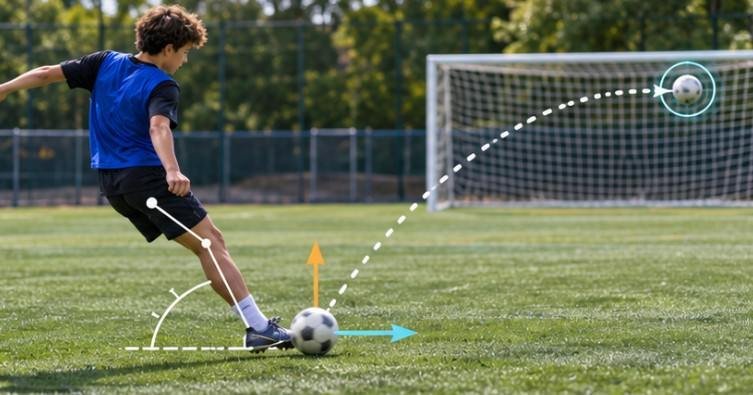
Students use their evidence to make predictions.
A group investigating ball bounce might predict the result of changing the release height, then test whether its model works.
This sequence moves learning beyond experimentation toward reasoning and evidence-based decision-making.
Classroom Activity: Investigating Basketball Shooting Accuracy
A simple basketball investigation can combine mathematics, physics, and digital analysis.
Suggested investigation procedure
- Choose a question: Does shooting distance affect accuracy under consistent conditions?
- Set up the experiment: Mark three distances and use the same ball and basket.
- Collect evidence: Have participants attempt 10 shots per distance, recording successful attempts.
- Calculate results: Divide successful attempts by total attempts and multiply by 100.
- Create a graph: Compare shooting percentages across the three distances.
- Evaluate limitations: Discuss differences in skill, fatigue, sample size, and shooting technique.
- Repeat and refine: Collect additional trials to see whether the original pattern remains consistent.
The activity can be completed using a spreadsheet and ordinary sports equipment. Video recordings are optional.
Teachers should evaluate students on experimental reasoning and evidence interpretation rather than shooting performance.
Connecting Sports Investigations With Digital Curriculum
Structured educational programs can help teachers integrate athletic investigations without designing every activity independently.
The STEM Sports Digital Curriculum introduces K–8 learners to sports-related data analysis, engineering, and scientific problem-solving.
Its activities connect familiar sports with measurable concepts, including movement, probability, and equipment performance.
Teachers can extend these lessons through collaborative dashboards, digital graphing, and group presentations.
The strongest classroom designs combine physical experiences with reflection, allowing students to explain what their measurements actually demonstrate.
Making Technology-Based Inquiry Accessible and Responsible
Advanced equipment is useful but not essential. Stopwatches, measuring tapes, shared tablets, and free spreadsheet tools can support rigorous investigations.
Teachers should consider several practical safeguards.
- Privacy: Avoid unnecessary collection of biometric information or identifiable student footage.
- Accessibility: Provide observation, analysis, and coding roles for students unable or unwilling to perform athletic tasks.
- Accuracy: Discuss the limitations of sensors and small datasets.
- Equity: Ensure students have meaningful participation opportunities regardless of sporting experience.
The U.S. Department of Education’s student privacy guidance explains when school-maintained photographs and videos may qualify as protected education records.
Educators should also follow district policies concerning device use, parental permissions, and data storage.
How Teachers Can Measure Learning Outcomes
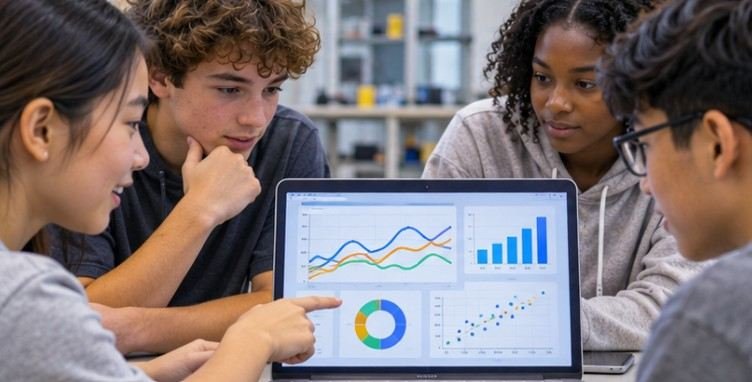
A successful investigation should demonstrate more than student enthusiasm. Teachers can evaluate whether learners formulate testable questions, control variables, interpret graphs, explain uncertainty, and defend their conclusions.
Short written explanations, group presentations, and revised experimental designs provide useful assessment evidence.
The Institute of Education Sciences describes an argument-driven inquiry model in which students collect evidence, present explanations, critique competing interpretations, and revise their findings. Its instructional framework offers a useful structure for assessing scientific reasoning. These measures help distinguish meaningful learning from technology-centered entertainment.
Frequently Asked Questions
1. What equipment is needed for sports technology classroom inquiry?
Basic equipment includes stopwatches, measuring tapes, sports balls, and spreadsheets. Schools with additional resources can introduce motion sensors, wearable trackers, video analysis tools, or educational robotics.
2. Can sports technology support students who dislike athletics?
Yes. Students can investigate equipment performance, analyze anonymous datasets, create graphs, program robots, or develop mathematical models without participating in competitive sports.
3. Which school subjects benefit most from sports analytics?
Physics, mathematics, computer science, engineering, and physical education are natural matches. Students can also practice scientific writing, collaborative communication, and critical evaluation.
4. How can teachers introduce these activities on limited budgets?
Start with familiar equipment and one measurable question. Use manual observations and shared spreadsheets before considering specialized sensors or commercial learning platforms.
Let the Evidence Lead
The most powerful sports-based lesson does not necessarily require expensive technology, sophisticated software, or exceptional athletes.
It begins with a question worth investigating. A basketball, stopwatch, or simple movement recording can help students discover how scientific knowledge develops through observation, testing, and revision.
What matters is whether learners can explain their results, recognize uncertainty, and improve their ideas.
For educators exploring the relationship between athletics and academic learning, the opportunity is clear: turn familiar physical activities into meaningful intellectual challenges. The goal is not to train better athletes. It is to develop more capable investigators.