What Makes Mountain Driving Tough on Your Car?
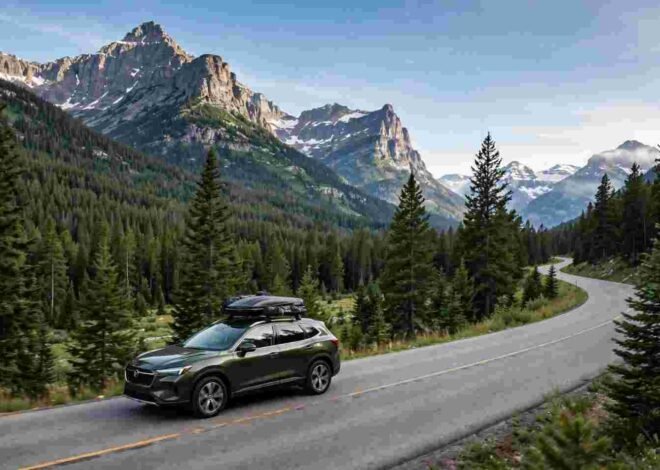
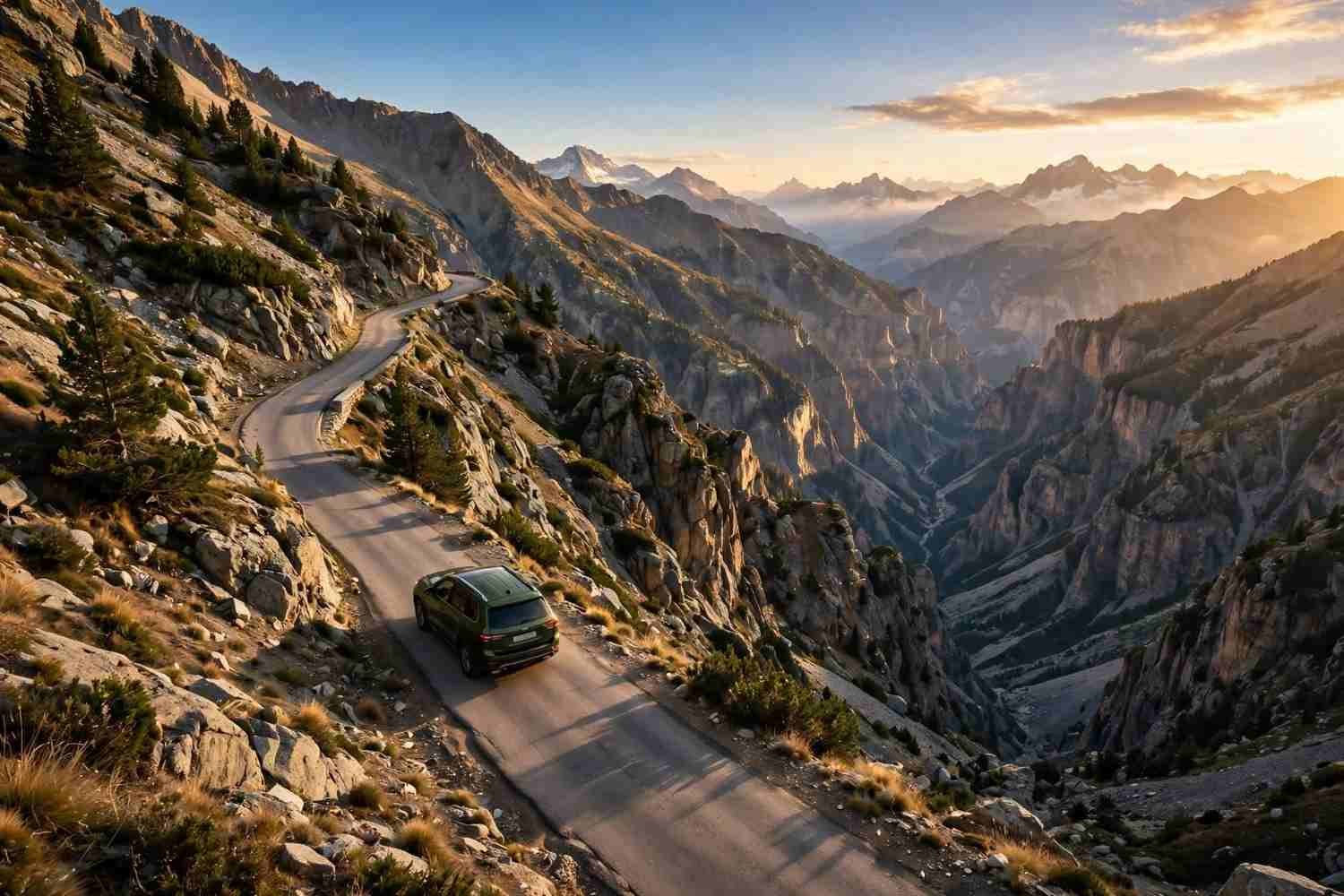
Few road trips match the sheer exhilaration of climbing a mountain pass. The panoramic ridgelines, dramatic canyon drop-offs, and crisp alpine air offer an unforgettable escape from the daily highway commute.
Yet, as you enjoy the scenery, your vehicle is working harder than it ever does on flat terrain. Steep gradients, thinner air, and winding descent curves place sustained, compound stress on nearly every major mechanical system beneath your hood and chassis. What feels like a routine drive can quickly strain your cooling system, cook your brakes, and thin out critical lubricants.
Understanding why high-elevation driving is so taxing on your vehicle helps you anticipate potential problems, adjust your driving habits, and protect your vehicle from costly premature wear.
1. Thin Alpine Air and Stifled Engine Performance
High elevation reduces engine horsepower and efficiency because thinner atmospheric air contains significantly less oxygen, forcing engines to work harder to maintain speed.
Combustion engines rely on a precise ratio of atmospheric oxygen and fuel to generate propulsion. At sea level, air is dense and rich in oxygen. As you ascend into mountain territory, air pressure drops steadily. A naturally aspirated engine loses roughly 3% of its power output for every 1,000 feet of elevation gained. By the time you reach an 8,000-foot summit, your vehicle has lost nearly a quarter of its available horsepower.
While modern computer-controlled fuel injection systems adjust the fuel trim to prevent the engine from running overly rich, they cannot replace missing oxygen molecules. Your engine must rev higher and downshift more frequently just to maintain legal highway speeds, dramatically increasing internal friction and component stress.
2. Sustained High RPMs and Engine Oil Breakdown
Climbing steep grades forces engines to operate at sustained high RPMs, generating intense thermal stress that rapidly degrades the lubricating properties of motor oil.
On flat freeways, your transmission shifts into high overdrive gears, allowing the engine to cruise comfortably at modest engine speeds. Mountain ascents demand relentless torque. Tugging thousands of pounds of vehicle weight against gravity forces the powertrain to hold lower gears at 3,500 to 5,000 RPM for miles on end.
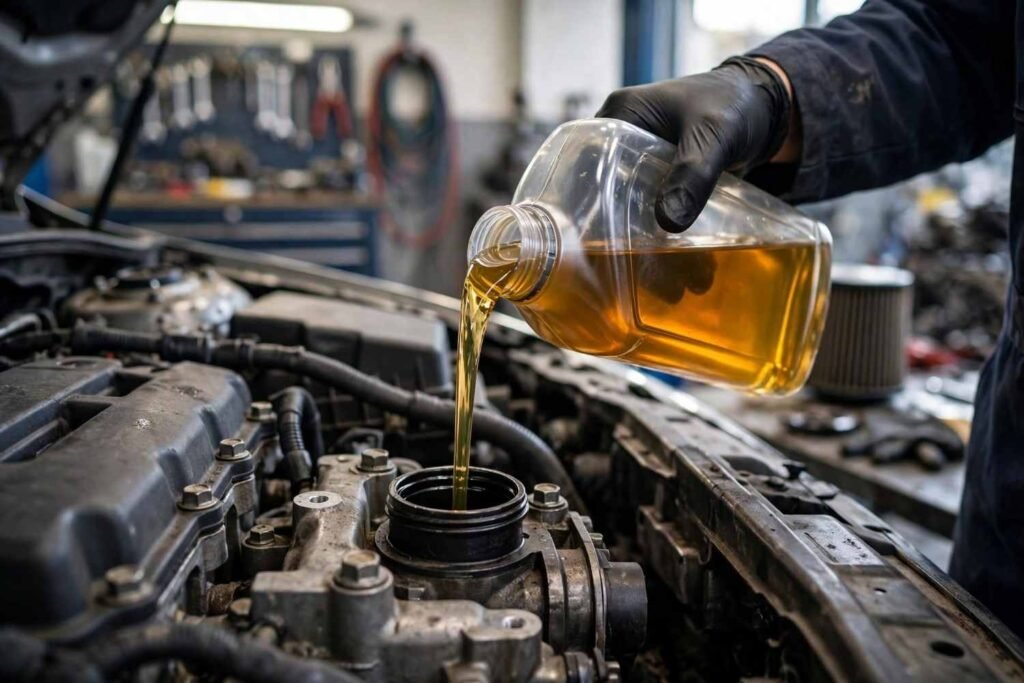
This sustained high-load demand accelerates engine oil thermal breakdown. Extreme friction shears the protective viscosity modifiers in motor oil, thinning it out and reducing its ability to shield critical engine bearings, cam lobes, and pistons from metal-on-metal contact. If you routinely traverse mountain corridors like Spanish Fork Canyon or the Nebo Loop, running fresh, high-grade synthetic oil is essential. Scheduling an oil change in Salem, UT before tackling high-elevation routes guarantees your engine has fresh, heat-resistant lubrication capable of withstanding prolonged climbs.
3. Downhill Friction and the Danger of Brake Fade
Steep mountain descents punish braking systems by generating extreme friction heat that causes brake fade, glazed friction pads, and boiling hydraulic brake fluid.
When descending an eight percent grade, drivers instinctively keep a foot resting against the brake pedal to check their speed. This practice, known as riding the brakes, turns mechanical energy directly into thermal energy. Rotors and brake pads can easily exceed 600°F to 800°F within minutes of downhill travel.
Once thermal thresholds are breached, vehicles experience brake fade on mountain roads:
- Friction Glazing: Brake pad resins overheat and liquefy, coating the pad surface in a slick, glassy glaze that severely reduces stopping power.
- Boiling Brake Fluid: Extreme rotor heat transfers through the calipers into the hydraulic lines. If the fluid boils, vapor bubbles form in the lines, causing the brake pedal to sink softly to the floorboard without slowing the car.
Instead of riding the brakes continuously, use the “snub braking” method: apply firm, steady pressure for five seconds to reduce your speed by five to ten miles per hour, then release the pedal completely to allow passing air to cool the rotors.
4. Transmission Heat and Constant Gear Hunting
Mountain switchbacks and shifting grades cause automatic transmissions to hunt between gears, which rapidly spikes internal hydraulic temperatures and wears down clutch packs.
An automatic transmission control module constantly seeks the ideal balance between power delivery and fuel economy. On undulating mountain grades, your vehicle encounters transmission gear hunting on inclines. The vehicle downshifts to climb a rise, detects a brief leveling off, upshifts to conserve fuel, and immediately loses momentum, forcing another aggressive downshift.
Every shift cycle causes internal clutch plates to slip momentarily to ensure smooth engagement. In heavy mountain driving, this constant cycling generates tremendous shear heat inside the transmission fluid. Once fluid temperatures climb past 230°F, hydraulic seals begin to harden and clutch materials break down, drastically shortening transmission lifespan.
5. Reduced Radiator Cooling in Thinner Air

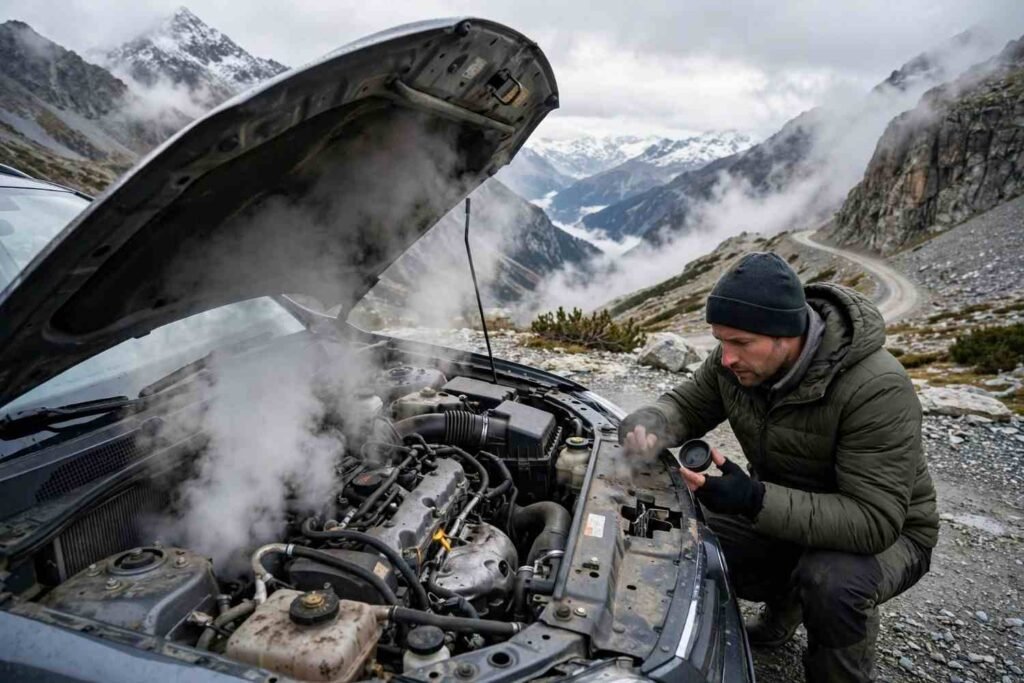
Cooling systems struggle in high-altitude environments because low-density air extracts less heat from radiator fins, while lower boiling points increase the risk of boil-overs.
Cooling a vehicle requires moving ambient air across the radiator surface to absorb engine heat. Because mountain air is less dense, each cubic foot of air flowing through your grille carries fewer molecules to carry heat away. At the same time, your water pump and cooling fan are running hard to combat the intense engine loads of climbing.
Furthermore, lower atmospheric pressure lowers the physical boiling point of fluids. While a sealed radiator cap increases system pressure to keep coolant liquid, any weak hose clamp, leaking cap seal, or diluted coolant mixture can quickly allow water to flash into steam, leading to sudden mountain roadside overheating.
6. Suspension Wear and Sudden Tire Pressure Shifts
Tight canyon switchbacks increase lateral force on suspension bushings and wheel bearings, while extreme alpine temperature swings alter tire pressure.
Mountain roads demand aggressive lateral steering inputs. Twisting roads place high cyclical loads on tie rods, sway bar links, and front wheel hub assemblies. At the same time, mountain elevation changes play havoc with tire inflation.
For every 10°F drop in ambient temperature, tire pressure decreases by roughly one PSI. A car that leaves a warm valley floor with properly inflated tires can easily see pressures drop three to five PSI after ascending into freezing mountain passes. Underinflated tires flex excessively along corners, creating uneven tread wear and compromising steering precision along narrow canyon shoulders.
7. Myth vs. Fact: Mountain Driving Habits
Misconceptions about how modern cars handle grades frequently lead drivers into dangerous mechanical habits:
Myth: Shifting an automatic car into Neutral while coasting downhill saves fuel and relieves engine stress.
Fact: Coasting in Neutral disconnects the engine from the drivetrain, eliminating engine braking and forcing service brakes to absorb all the kinetic energy. Modern fuel-injected vehicles shut off fuel flow to the injectors entirely when decelerating in gear, making in-gear coasting both safer and more fuel-efficient.
Myth: You should only downshift manually into “Low” or “L” if your car is towing a trailer.
Fact: Manually selecting a lower gear (second or third) on long descents lets engine compression govern downhill momentum, keeping service brakes completely cool and ready for emergency stops.
Mountain driving is one of the ultimate tests of an automobile’s durability. The combined demands of altitude hypoxia, continuous uphill torque, and severe downhill friction push every fluid, seal, and mechanical component to its operational limit.
By understanding how thin air reduces engine performance, using engine braking to protect your brake pads, and maintaining fresh, high-quality lubricants and coolants, you can protect your vehicle against severe high-altitude strain. If you’re planning your first national park road trip, preparing your vehicle for steep climbs, winding roads, and challenging descents is essential. Taking a proactive approach to mountain driving ensures your vehicle handles demanding terrain with greater safety, reliability, and confidence.