PE Teacher Professional Learning Community Ideas That Improve Student Learning
A physical education teacher may lead hundreds of students every week yet have almost no opportunity to discuss instructional challenges with another PE specialist. That isolation makes professional collaboration especially valuable.
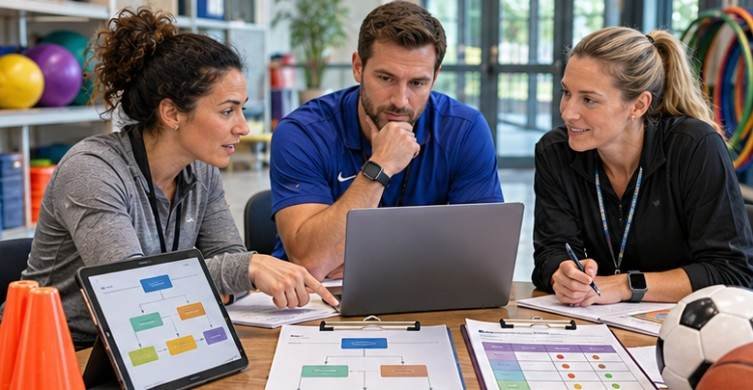
The best pe teacher professional learning community ideas go beyond exchanging games or organizing field days. They help educators examine student performance, improve teaching strategies, and build consistent learning experiences across grade levels.
The difference lies in what happens after teachers meet. A productive professional learning community (PLC) turns a shared classroom challenge into an instructional experiment, measures the results, and uses the evidence to improve the next lesson.
Seven Practical PE Teacher PLC Ideas Worth Trying
1. Design a Sport Education Learning Cycle
Instead of planning individual activities, teachers can collaboratively develop a complete Sport Education season.
For example, a middle school PLC might create a four-week volleyball unit where students rotate through coaching, officiating, equipment management, and leadership responsibilities.
Teachers can compare participation patterns, teamwork, tactical understanding, and student reflections.
The purpose is not simply to increase enthusiasm. It is to determine whether structured responsibilities improve meaningful learning and participation.
2. Investigate Physical Activity and Movement Data
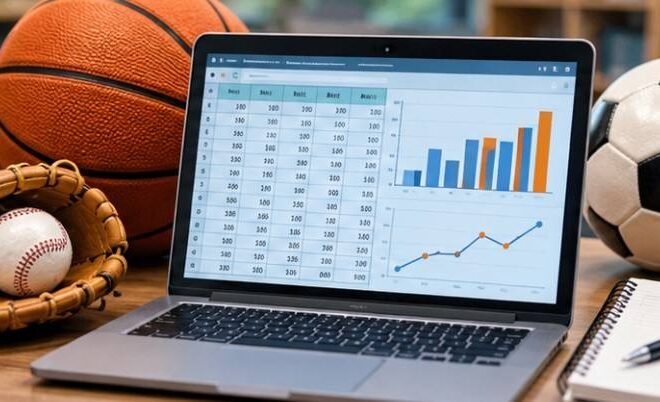
Movement data can reveal instructional weaknesses that observation alone might miss.
The Centers for Disease Control and Prevention recommends that students participate in moderate-to-vigorous physical activity for at least 50% of PE instructional time. Its guidance also identifies administrative and management tasks as barriers to active learning.
PLC members can examine:
- Time spent moving versus listening to instructions.
- Skill development before and after instructional units.
- Participation differences between activity formats.
- Student confidence and perceived movement competence.
For example, teachers might compare traditional relay activities with small-group skill stations to determine which provides more practice opportunities.
Fitness assessments, including PACER results where appropriate, should inform individualized instruction rather than publicly rank students.
3. Create Common Standards-Based Assessment Rubrics
Assessment becomes more meaningful when educators agree on what successful performance looks like.
The 2024 SHAPE America National Physical Education Standards provide a framework covering motor skills, movement knowledge, social skills, and personal development.
A PLC could create a four-level rubric for passing accuracy, movement decision-making, or cooperative behavior.
Teachers should test the rubric independently using the same student performance sample, then compare their ratings.
Disagreements reveal unclear expectations and help improve assessment consistency.
This process also supports aligning athletic coaching with academic standards, especially when instructional goals involve leadership, decision-making, and personal responsibility.
4. Use Short Videos for Peer Coaching
Watching an entire lesson is not always necessary to identify useful improvements.
Teachers can examine five-minute recordings of instructional transitions, equipment distribution, skill demonstrations, or group activities.
During the discussion, colleagues should focus on observable evidence rather than personal judgments.
Questions might include:
- How long did students wait before beginning practice?
- Were instructions understandable without repeated explanations?
- Which students received corrective feedback?
- Could equipment placement improve lesson flow?
Recording requires school authorization, compliance with student privacy policies, and approved storage procedures. When filming is inappropriate, colleagues can observe lessons directly or use anonymized observation notes.
5. Build Inclusive Activity Adaptations
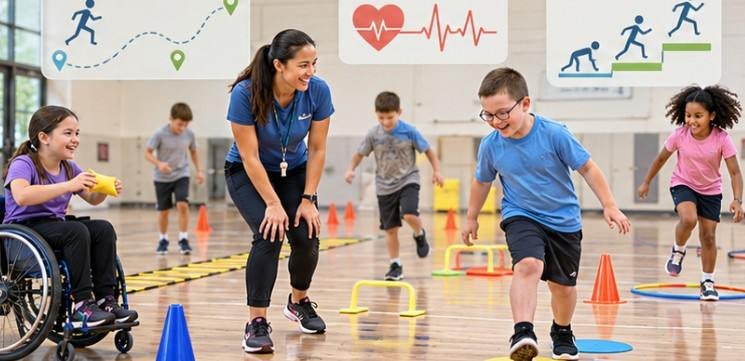
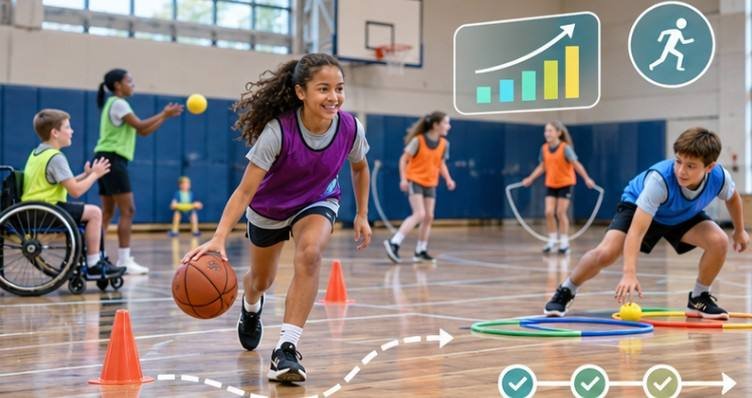
An effective PE curriculum must accommodate students with different abilities, experiences, and confidence levels.
PLC members can redesign one activity using alternative equipment, modified playing areas, flexible rules, or different participation options.
For example, a striking-and-fielding lesson might include larger balls, adjustable striking supports, and multiple ways to complete a successful attempt.
Teachers can evaluate whether these changes increase participation without eliminating meaningful skill development.
Students receiving adapted physical education services should also benefit from collaboration with relevant specialists.
6. Experiment With Cross-Curricular Movement Projects
Physical education can reinforce academic learning without losing its primary instructional purpose.
A PLC might collaborate with mathematics teachers to investigate pacing, distance, and speed through movement activities.
Another group could partner with social studies educators to explore cultural dances and their historical significance.
These projects work best when both subjects have explicit learning objectives and separate assessment criteria.
Teachers interested in deeper inquiry can explore disciplined inquiry in sports education to connect physical participation with observation, questioning, and evidence-based reasoning.
7. Create a Shared Lesson Improvement Library
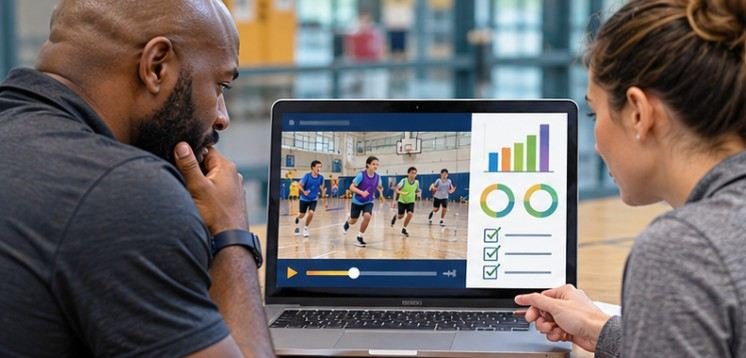
A digital resource library becomes valuable when teachers document what actually worked.
Instead of collecting hundreds of disconnected activities, each contribution should include its objective, grade range, equipment, modifications, assessment method, and instructional reflections.
PE Central offers assessment examples and resources that teachers can use as starting points.
PLC members can then refine their shared lessons using classroom evidence, building a practical collection of tested instructional approaches.
A Four-Week PLC Experiment Teachers Can Replicate
Consider a department where students spend excessive time waiting during basketball instruction.
The team could conduct a straightforward improvement cycle.
- Week One — Establish a baseline: Observe two classes and record practice time, waiting time, and participation opportunities.
- Week Two — Introduce a change: Replace large-group drills with smaller stations and additional practice equipment.
- Week Three — Collect comparable evidence: Observe similar lessons using the original measurement method.
- Week Four — Evaluate: Compare results, discuss student experiences, and decide whether to retain or modify the approach.
For example, increasing active practice time from 18 to 25 minutes in a 45-minute lesson represents a seven-minute improvement, or approximately 39% more active time.
These figures illustrate the calculation, not research findings.
The team should also examine skill quality and inclusion. More movement does not automatically mean better learning.
Frequently Asked Questions
1. What is the main purpose of a PE professional learning community?
Its purpose is to improve student learning through collaborative planning, shared assessment, instructional experimentation, and evidence-based reflection.
2. How often should PE teachers meet as a PLC?
Biweekly meetings can provide a practical starting point. Consistency, protected planning time, and measurable follow-up actions matter more than meeting frequency alone.
3. What are the best pe teacher professional learning community ideas for beginners?
Start with one shared skill rubric, a lesson observation, or a student engagement audit. Small, measurable projects establish productive collaboration habits.
4. Can elementary and high school PE teachers collaborate?
Yes. Cross-grade collaboration helps educators understand skill progression, coordinate curriculum expectations, and identify learning gaps that emerge between school levels.
Make Every Meeting Count
The real value of a PE professional learning community is not the number of resources teachers exchange. It is the improvement students experience afterward.
A single discussion about waiting time could lead to redesigned activities, additional movement opportunities, and more effective instruction across an entire department.
Teachers should begin with one question they cannot answer confidently, gather evidence, and investigate it together.
Small instructional experiments are often more manageable than sweeping curriculum changes. Over time, those experiments can create shared expectations, stronger assessment practices, and a culture of professional trust. The most successful PLC meeting ends with something worth testing in the gym.