
Disciplined Inquiry in Sports Education: Teaching Students to Think Beyond the Game
A student can execute a perfect basketball pass and still struggle to explain why it was the right decision. That gap reveals something important about physical education: athletic ability and tactical understanding are not the same.
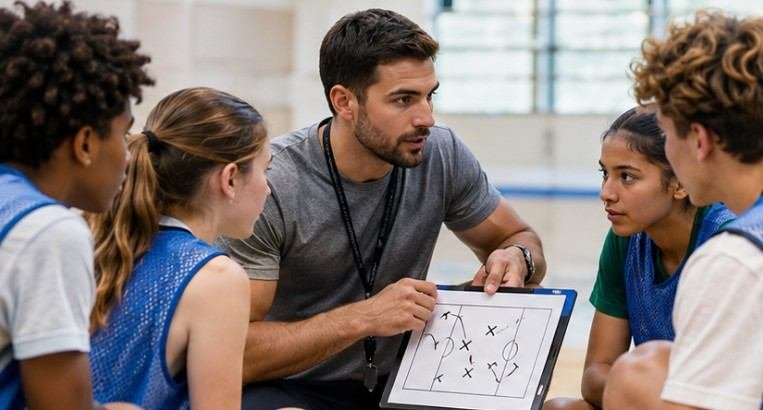
Disciplined inquiry in sports education helps students connect movement with evidence, reasoning, and strategic decision-making. Instead of simply following drills, learners investigate game situations, test solutions, and explain their results.
For American schools seeking stronger critical thinking alongside physical fitness, this approach offers a practical way to make every game a learning opportunity.
What Is Disciplined Inquiry in Sports Education?
Disciplined inquiry is a structured learning process in which students apply existing knowledge, investigate meaningful problems, develop deeper understanding, and communicate evidence-based conclusions.
In physical education, students become active investigators of movement, strategy, teamwork, and performance.
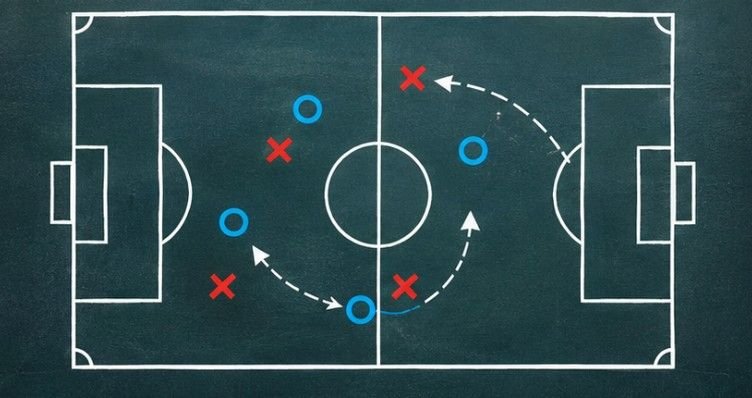
For example, rather than instructing soccer players to spread across the field, a teacher might ask why certain formations create better passing opportunities.
Students examine spacing, experiment with positioning, and evaluate which adjustments improve possession.
The approach connects with the University of Wisconsin–Madison’s research on authentic intellectual work, which identifies prior knowledge, deep understanding, and elaborated communication as essential features of disciplined inquiry.
The difference is significant: students are not merely learning how to perform a skill. They are learning when, why, and how to apply it.
Why Thinking Skills Belong on the Playing Field
Traditional sports instruction often prioritizes repetition, technical accuracy, and immediate performance. These remain important, but isolated drills cannot fully reproduce the decisions athletes face during competition.
The 2024 SHAPE America National Physical Education Standards emphasize applying movement concepts, tactics, fitness knowledge, and strategies across different environments.
This supports a broader understanding of physical literacy that includes intelligent movement and informed choices.
Research also provides encouraging evidence.
A 2023 systematic review and meta-analysis of Teaching Games for Understanding found stronger improvements in decision-making than traditional technical instruction, while skill execution improved similarly.
However, findings concerning enjoyment, perceived competence, and future physical activity intentions were less certain.
The practical implication is that inquiry-centered coaching can strengthen tactical understanding without necessarily sacrificing technical development.
Connecting Physical Activity With Cognitive Development
The Centers for Disease Control and Prevention recommends at least 60 minutes of moderate-to-vigorous daily physical activity for children and adolescents ages 6–17.
The agency also identifies benefits involving cognition, memory, and mental health.
Inquiry-based lessons can preserve meaningful movement while introducing observation, prediction, and reflection.
The challenge is designing activities that require thinking without turning an active lesson into a lengthy classroom discussion.
The Four Stages of a Successful Sports Inquiry
An effective inquiry lesson follows a deliberate sequence. Each stage builds on the previous one and gives students responsibility for understanding their performance.
1. Identify a Meaningful Game Problem
Begin with a challenge students can recognize during actual play.
In volleyball, the question might be why a team repeatedly loses points when receiving serves.
Students examine positioning, communication, and ball placement rather than immediately repeating receiving drills.
The teacher establishes the learning objective and ensures students understand the relevant rules and techniques.
2. Develop a Testable Prediction
Students propose explanations and possible solutions.
A volleyball team might predict that assigning clearly defined receiving zones will reduce communication errors.
Encourage specific predictions instead of general statements such as improving teamwork.
A useful hypothesis identifies what students will change and what improvement they expect to observe.
3. Investigate Through Modified Play
Students test their predictions in realistic but manageable conditions.
The teacher might organize short volleyball games with designated receiving zones, then repeat the activity using flexible coverage.
Peers record communication errors, successful receptions, and positioning mistakes.
Modified games allow students to experience consequences directly while collecting evidence that informs their decisions.
4. Evaluate Evidence and Revise
Students compare results and explain whether their predictions were supported.
If fixed receiving zones reduced errors but created uncovered spaces, the class explores a revised arrangement.
The teacher asks students to justify their conclusions using observations rather than personal preferences.
This final stage transforms gameplay into meaningful learning.
How to Measure Learning Beyond Athletic Performance
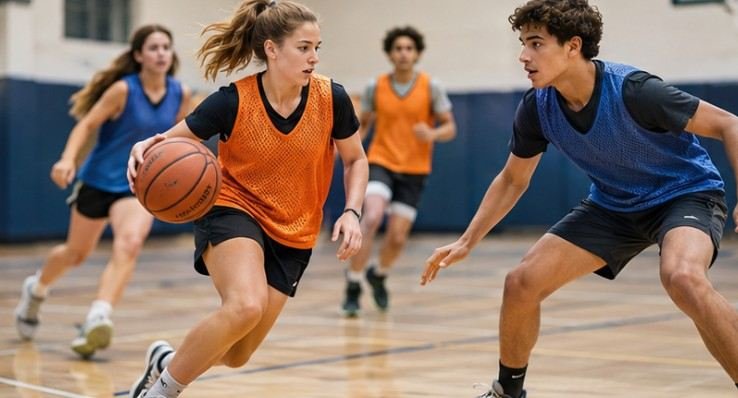
A successful inquiry lesson should assess more than whether students win.
Teachers need evidence that learners can recognize problems, interpret information, and transfer strategies into unfamiliar situations.
A simple four-part assessment examines:
- Knowledge: Can students explain the movement principles involved?
- Reasoning: Can they justify a strategy using observations?
- Application: Can they adjust their decisions during live play?
- Communication: Can they explain findings clearly and respond to feedback?
Consider a student who struggles with shooting accuracy but correctly identifies why defenders are leaving certain areas open.
Their technical execution needs improvement, yet their tactical understanding deserves recognition.
Short reflection prompts, peer feedback, and observation rubrics help capture these different dimensions.
Assessment should reward thoughtful revisions, not just correct initial predictions.
Making Inquiry Inclusive, Motivating, and Practical
Inquiry-based sports education works best when every student has opportunities to contribute.
Teachers should provide different entry points for learners with varying physical abilities, confidence levels, and sporting backgrounds.
For example, students investigating passing strategies can participate through adapted games, tactical observations, or video analysis when appropriate.
UNESCO’s quality physical education framework emphasizes inclusive participation, peer learning, and the development of physical, social, and emotional capabilities.
Student choice can also strengthen ownership. Allow teams to select between two tactical challenges or propose alternative testing methods.
The teacher’s responsibility shifts from delivering every answer to guiding productive investigation.
This does not mean abandoning demonstrations or direct instruction. Beginners still need explicit guidance on safety, technique, and essential rules.
What Teachers Should Avoid
Not every discussion qualifies as disciplined inquiry.
Asking students what they enjoyed about a game encourages reflection, but it does not automatically require investigation or evidence-based reasoning.
Similarly, collecting statistics becomes meaningless when students cannot explain what the numbers indicate.
Overly complicated challenges can also reduce active participation.
Start with one question, one measurable outcome, and a short testing period. Increase complexity as students develop confidence.
School leaders seeking stronger participation can also draw on ideas for building excitement and awareness when promoting new educational initiatives, while adapting those communication principles to a school environment.
Frequently Asked Questions
1. What is the main purpose of disciplined inquiry in sports education?
Its purpose is to help students investigate sporting challenges, apply existing knowledge, evaluate evidence, and develop deeper tactical understanding alongside physical skills.
2. How is inquiry-based PE different from traditional PE?
Traditional instruction often emphasizes demonstrations and repetition. Inquiry-based PE adds student-generated predictions, modified games, evidence collection, and reflection to improve decision-making.
3. Can elementary students participate in disciplined inquiry?
Yes. Younger students can investigate simple movement challenges using pictures, guided questions, short games, and verbal explanations appropriate to their developmental level.
4. Does inquiry-based teaching reduce physical activity time?
Not necessarily. Teachers can incorporate investigation into active games, collect observations during movement, and keep discussions brief to preserve physical participation.
The Bigger Lesson Beyond Sports
The most valuable moment in a physical education lesson may not be the winning goal or the perfect shot. It may be when a student recognizes why a decision failed and identifies a better alternative.
Disciplined inquiry creates opportunities for students to become thoughtful participants rather than passive followers of instructions.
Its success depends on purposeful questions, sufficient movement, reliable observations, and meaningful reflection.
Teachers do not need expensive equipment or complicated technology to begin. One carefully designed tactical challenge can change how students experience an entire lesson.
The ultimate goal is not simply to develop better athletes, but to develop learners who can think while they move.