Construction of Knowledge vs Reproduction in Authentic Learning: An Educator’s Guide
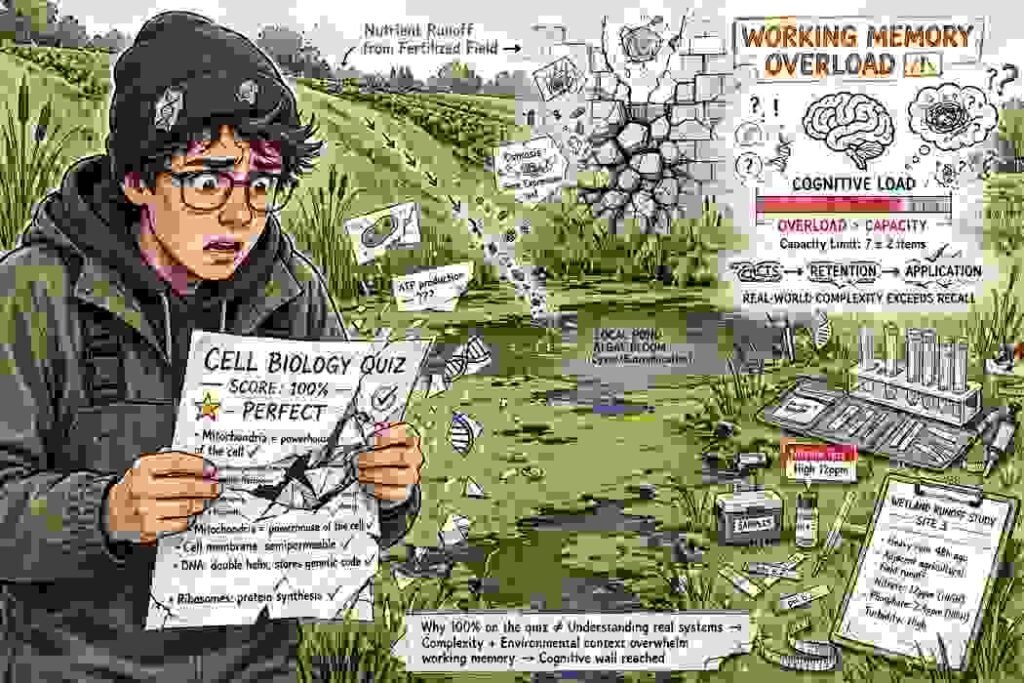
When I spent my first two years teaching high school science, my students earned near-perfect scores on cell biology quizzes. Two weeks later, during a field study on wetland run-off, those same students could not explain why a sudden algae bloom was suffocating the local pond. They possessed facts, but they owned nothing.
Understanding the tension between the construction of knowledge vs reproduction in authentic learning changed how I design instruction. Rote reproduction turns learners into transcribers who mirror back pre-digested answers. Authentic learning demands that students manipulate facts, test variables, and build durable mental frameworks.
Here is how both educational philosophies perform when tested in real classrooms, alongside a clear pathway to transition students from passive consumers to capable builders.
The Fundamental Divide: Passive Mirroring vs. Active Synthesis
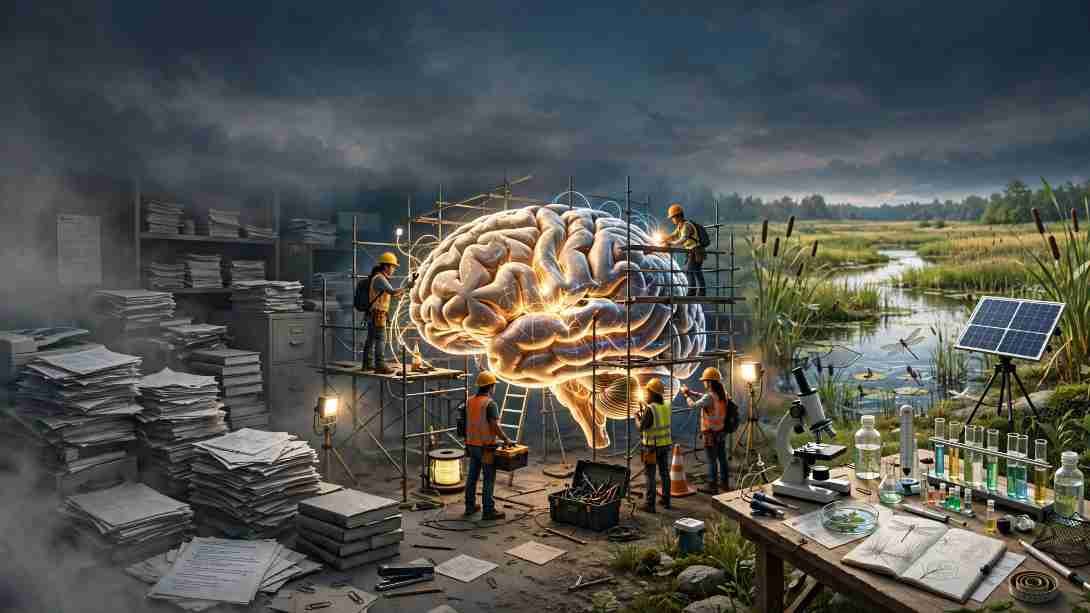
Traditional curricula treat student minds as empty vessels waiting for teacher delivery. Authentic models view cognition as an iterative construction site where meaning must be built from the ground up.
Why Knowledge Reproduction Hits an Early Cognitive Wall
Reproduction centers on fidelity. The primary metric of success is how closely a student’s answer matches the instructor’s key or textbook glossary. When students memorize definitions, chemical formulas, or historical dates out of context, they engage low-level retrieval.
According to cognitive frameworks documented by the Vanderbilt University Center for Teaching, working memory handles isolated facts without embedding them into long-term schema. The utility of reproductive knowledge often expires the minute an exam sheet is turned in. It produces fragile competence that instantly shatters whenever a variable shifts outside sterile classroom conditions.
The Cognitive Mechanics of Authentic Knowledge Construction
Knowledge construction operates on constructivist foundations. Learners do not simply absorb facts; they reorganize their existing schema by colliding new information with real-world messiness.
When my students analyze local municipal water reports rather than filling out water-cycle worksheets, they run into contradictions. They encounter missing variables, uncalibrated instruments, and conflicting stakeholder priorities. Making sense of that noise forces critical thinking, causal reasoning, and synthesis. Research compiled on the Edutopia platform shows that this authentic engagement yields durable retention because neural pathways wire around functional utility, not passive reception.
Comparing the Frameworks: Core Realities in the Modern Classroom
The philosophical differences between these two modes shape classroom design, student behavior, and assessment outcomes.
| Dimension | Knowledge Reproduction | Knowledge Construction |
| Primary Goal | Duplicate existing facts accurately | Produce novel insights or functional artifacts |
| Cognitive Depth | Rote recall and algorithmic execution | Analysis, evaluation, and schema reorganization |
| Student Agency | Receptive consumer waiting for instructions | Lead investigator navigating ambiguous scenarios |
| Task Design | Clean, decontextualized worksheets and multiple-choice tests | Ill-structured, ecologically valid real-world problems |
| Assessment Metric | Binary correctness (“right vs. wrong”) | Evaluated logic, iterative defense, and real utility |
| Knowledge Transfer | Fragile; restricted to test-specific environments | Robust; readily mobilized across novel contexts |
The “Cognitive Handshake”: Scaffolding from Recall to Creation
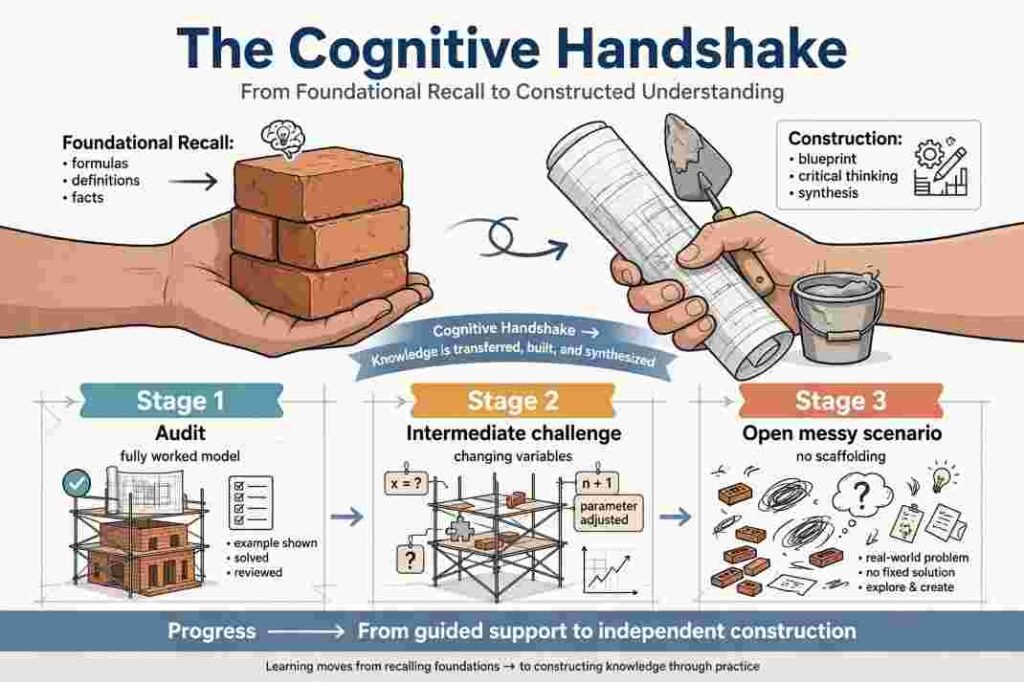
A widespread pedagogical myth claims that authentic learning discards memorization entirely. In my experience, attempting constructivist problem-solving without foundational facts produces frustration rather than innovation. Construction cannot happen in a vacuum.
Instead, I use what I call the “Cognitive Handshake.” Reproduction provides the raw bricks; construction provides the blueprint and mortar. Foundational recall acts as an instrumental springboard toward higher-order inquiry. When educators structure this transition systematically, students achieve authentic intellectual work standards that mirror real professional scholarship.
Faded Problem Solving in Practice
Throwing novices into ill-structured environments overloads their working memory. To move students systematically from reproduction to construction, I implement backward-faded scaffolding across a three-stage sequence:
First, students audit a fully worked model. They verify formulas and point out baseline factual rules.
Next, they tackle an intermediate challenge where core formulas must be retrieved from memory, but the contextual variables change unexpectedly.
Finally, all scaffolding fades. Students confront open, messy scenarios where they must define the problem boundary, select their own tools, and construct an original solution. Peer-reviewed research within the ERIC Database consistently demonstrates that this structured reduction in teacher support prevents cognitive overload while fostering independent mastery.
Shifting the Assessment Paradigm
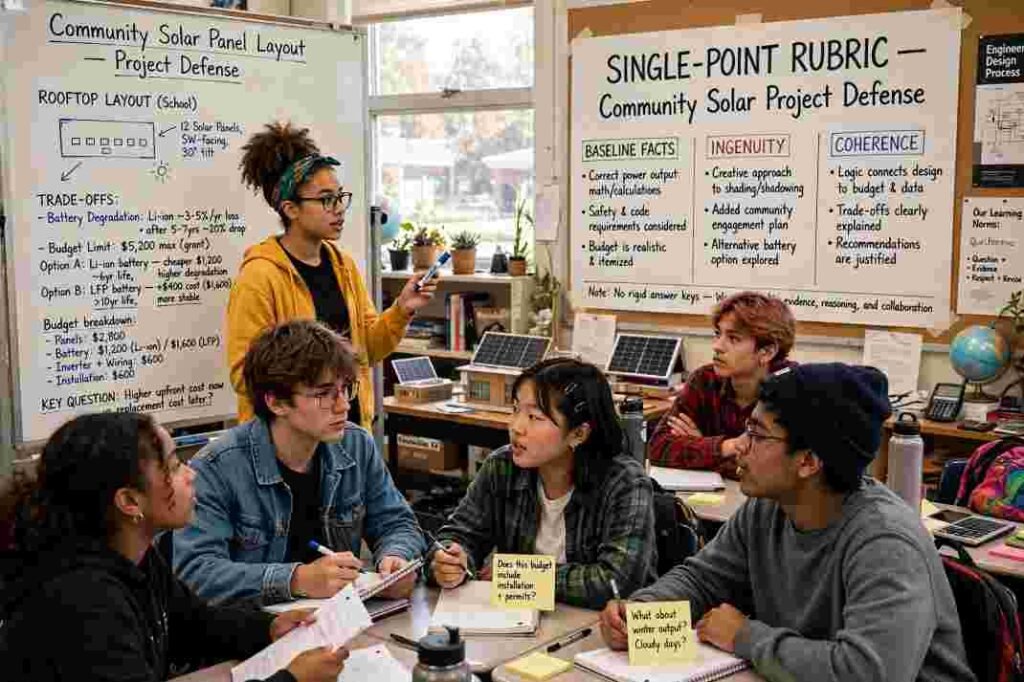
Grading constructive work requires abandoning rigid answer keys in favor of single-point rubrics. A single-point rubric defines the non-negotiable factual baseline while leaving room to assess the ingenuity and coherence of the student’s final synthesis.
During project defenses in my classroom, students present their findings to peer panels who challenge their assumptions. If a student proposes a community solar layout, peers question battery degradation and budget ceilings. The grade measures how effectively the student defends trade-offs, not whether they memorized the definition of photovoltaic cells.
Stop Grading Mirrors: Build Builders Instead
If our grading structures reward only mirrors, we should not act surprised when students struggle to navigate unscripted problems in their careers. Factual recall is an indispensable tool, but it makes a terrible destination.
Begin auditing your current lesson plans tomorrow. Take one standard multiple-choice assessment and transform it into a diagnostic case study. Require your students to use the formulas they memorized to patch a broken real-world system. When you trade the safety of reproduction for the dynamic friction of construction, true learning takes root.
Frequently Asked Questions
1. Does authentic learning eliminate the need for memorization?
No, foundational facts and vocabulary provide the raw building blocks needed to construct complex solutions.
2. Why is knowledge reproduction ineffective when applied to novel problems?
Reproduced knowledge remains tied to the specific format in which it was learned, making cross-context transfer difficult.
3. How does knowledge construction improve long-term retention?
It requires deep cognitive synthesis and schema integration, anchoring concepts into long-term memory through direct functional utility.
What is the most reliable way to assess student knowledge construction?
Use authentic project portfolios, iterative defenses, and single-point rubrics evaluated against real-world criteria.