
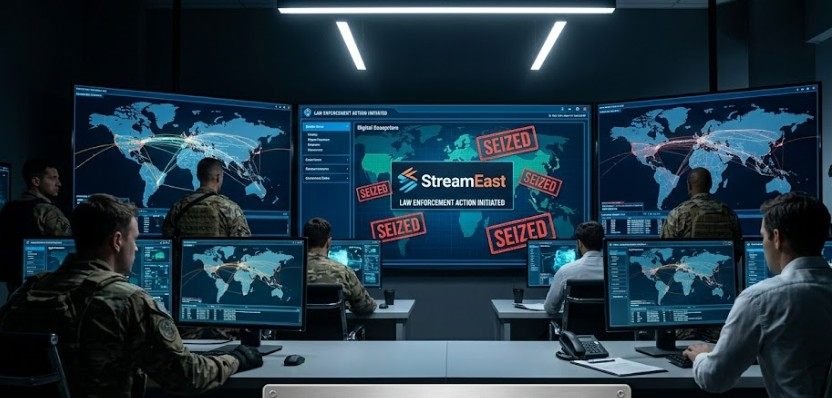
The Fall of StreamEast: Inside the Takedown of Sports Streaming’s Biggest Pirate Network
Before its sudden domain seizure, StreamEast logged a mind-boggling 1.6 billion visits in a single year across more than 80 connected domains. It was so embedded in modern sports culture that NBA superstar LeBron James was once spotted on camera using a pirated stream courtside.
Yet in late 2025, the world’s largest illegal live sports streaming empire collapsed virtually overnight.
If you tried loading your usual sports feed recently only to hit a dead wall or a law enforcement splash page, you are not alone. A multi-agency, international sting operation dismantled the network from the top down, sending shockwaves through the sports entertainment ecosystem.
Here is what really happened behind the scenes of the shutdown, why trying to find mirror sites right now poses serious risks, and how fans can navigate the modern streaming landscape safely.
What Happened to StreamEast? The Global Sting Operation Explained
For years, sports fans relied on unauthorized aggregators to bypass blackouts and costly subscription tiers. But in August 2025, an alliance of law enforcement agencies and industry giants closed in.
The operation was led by the Alliance for Creativity and Entertainment (ACE)—a global anti-piracy coalition representing heavyweights like Apple TV+, Amazon, and Paramount—working directly with Egyptian law enforcement, Europol, and the U.S. Department of Justice.
The raid in El-Sheikh Zaid, near Cairo, resulted in the arrest of two key operators. Authorities confiscated physical servers, smart devices, financial records, and crypto wallets holding over $200,000.
Investigative details revealed that the network had funneled roughly $6.2 million in illicit advertising revenue through a UAE-based shell company to purchase real estate. Shortly after, the Cairo Economic Court handed down criminal convictions against the operators, setting a legal precedent for international digital piracy enforcement.
Why Copycats and “Clone” Sites Pose Major Security Risks
When a massive network falls, a “whack-a-mole” dynamic instantly takes over. Dozens of clone sites using identical branding pop up to capture leftover search traffic.
However, these mirrors are rarely run by original operators; they are opportunistic traps designed to monetize unsuspecting sports fans.
[ Unofficial Stream Replica ]
│
┌─────────────┴─────────────┐
▼ ▼
[ Malicious Ads ] [ Phishing Form ]
│ │
▼ ▼
– Drive-by Downloads – Fake Account Sign-ups
– Session Hijacking – Credit Card Theft
– Cryptojacking Scripts – Stolen Credentials
Visiting unauthorized mirrors exposes your devices to heavy security threats:
- Drive-By Malware & Trojans: Clicking standard “Play” or “Close Ad” buttons often triggers silent script downloads that hijack system resources for crypto-mining or install keyloggers.
- Credential Phishing: Fake login overlays prompt users to create “free accounts,” harvesting emails, passwords, and payment card details.
- Aggressive Redirect Loops: Fake mirrors route users through endless ad-network tunnels that force browser notifications and push malicious extensions.
To protect your digital footprint, use the quick safety checklist below when encountering unfamiliar streaming portals.
The Streaming Safety Verification Checklist
Before clicking any link for a live game feed, evaluate the site against these flags:
- SSL & Domain Authority: Does the domain use an unnatural TLD (e.g., .is, .to, .top, .cc) paired with a mainstream brand name?
- Credit Card Requirements: Does the page ask for a credit card to verify your age on a “free” stream? (Legitimate free trials state clear terms; illegal clones just steal card numbers).
- Executable Downloads: Does starting the stream demand you update a “video player plugin” or download an .exe / .apk file?
- Ad Overlays: Do you have to click past three or four hidden ad layers just to see a player window?
The Real Cost of Sports Piracy
It is easy to view streaming piracy as a victimless shortcut around high cable bills, but the broader economic impact cascades across the entire sports industry.
Unlawful streaming platforms siphon billions in potential revenue from official rights holders. When leagues lose broadcast valuation, the financial squeeze hits every layer of the sport:
- Production Quality: Major networks invest heavily in high-definition camera tech, multi-angle replays, and expert commentary teams—all of which rely on broadcast ad and subscription revenue.
- Local Community & Grassroots Support: Media rights revenues fund regional sports networks, youth development programs, and stadium operations staff.
- Security & Infrastructure: Unregulated piracy hubs pay no taxes and often share financial connections with organized cybercrime syndicates.
Legitimate Alternatives for Live Sports
Navigating official options can feel fragmented, but choosing legitimate platforms ensures crisp 1080p/4K feeds, reliable server uptime, zero malware risks, and official commentary teams.
| Platform | Best For | Key Leagues & Coverage |
| ESPN+ | Comprehensive US Sports | NHL, MLB out-of-market games, PGA Tour, UFC PPV, College Sports |
| DAZN | Combat & International Soccer | Boxing, MMA, UEFA Women’s Champions League, NFL Game Pass (Intl) |
| Peacock | Premier League & Big Ten | Sunday Night Football, Premier League, Olympic coverage, WWE |
| Paramount+ | UEFA & Domestic Football | UEFA Champions League, Serie A, NWSL, NFL on CBS |
| Official League Passes | Die-hard Single-Sport Fans | NBA League Pass, MLB.TV, NFL+ (out-of-market live audio & local games) |
Limitations of Current Streaming Models
While legal options offer unmatched video clarity and system security, the modern sports streaming landscape is far from perfect.
Regional blackout rules remain a huge point of friction for fans. Local broadcast contracts frequently force national platforms to black out home-team games, frustrating subscribers who pay for monthly access only to be locked out on game day.
Additionally, market fragmentation forces users to juggle four or five different monthly subscriptions just to follow one team’s regular season. Until rights holders streamline cross-platform access and modernize regional blackout policies, consumers will continue feeling the tension between expensive monthly bundles and digital convenience.
Frequently Asked Questions
1. Is StreamEast coming back online?
No. The original network’s infrastructure was completely dismantled by international law enforcement, and its core domains now redirect to legal anti-piracy pages. Any site currently claiming to be the official platform is an unauthorized replica.
2. Why did StreamEast shut down so suddenly?
The shutdown followed a year-long joint investigation by the Alliance for Creativity and Entertainment (ACE) and Egyptian authorities. The sting led to raids, operator arrests, and the seizure of servers, domain assets, and financial accounts.
3. Are clone and mirror sites safe to browse?
No. Independent mirror sites using identical branding are designed to profit from redirect traffic. They carry high risks of aggressive pop-up ads, phishing scripts, and malicious software downloads.
4. How can I watch live sports legally without cable?
You can stream games through official standalone services like ESPN+, Peacock, Paramount+, and DAZN, or subscribe to direct-to-consumer league options like NBA League Pass and MLB.TV.
The fall of StreamEast marks a major turning point in modern sports media enforcement. As global anti-piracy groups tighten their grip on unauthorized broad-scale networks, relying on illegal streams has become a game of diminished returns, characterized by constant site domain hops and severe security hazards. Supporting official channels remains the safest, most reliable way to enjoy high-stakes live sports without risking your personal data.

Related Posts

Cyberbackgroundchecks Exposed: How Your Private Life Ended Up Online and How to Scrub It

Mastering MyKaty Cloud: The Ultimate Access & Security Guide for Katy ISD Families