Why Rural Factory Growth Depends on Modern Apartments
Over the past several years, a major shift has taken hold across the country’s heartland. Driven by supply chain reshoring, clean energy initiatives, and competitive land costs, manufacturers are increasingly choosing rural communities for new plant locations and major facility expansions. Small towns that once saw young adults move away are now witnessing multi-million-dollar industrial investments.
Yet, many factory executives and municipal leaders encounter an unexpected wall when trying to staff these new facilities: there is nowhere for their workers to live. The long-term success of rural industrial growth no longer hinges solely on tax incentives or rail access—it depends heavily on the availability of modern, high-quality apartment communities.
1. The Rural Industrial Resurgence and the Housing Bottleneck
Quick Answer: Rural factories are expanding rapidly, but a severe lack of modern rental housing prevents companies from recruiting and retaining the skilled workforce required to operate high-tech production lines.
When a new manufacturing facility or agricultural processing plant opens its doors in a rural county, it brings dozens—or even hundreds—of well-paying jobs. However, much of the surrounding housing stock was built decades ago, consisting primarily of aging single-family homes or mobile homes with near-zero turnover.
This severe rural workforce housing shortage creates a direct bottleneck for regional economic development. When relocating technicians, engineers, and plant managers cannot find suitable local housing within a reasonable commute, factories face chronic understaffing, high turnover, and delayed production rollouts.
2. Why Single-Family Homes Alone Cannot Solve the Labor Crisis
Quick Answer: Modern industrial workers need flexible, maintenance-free rental options rather than long-term home purchases when relocating for specialized production roles.
Historically, rural economic strategy focused almost exclusively on encouraging single-family homeownership. While homeownership remains a vital community goal, it does not match the immediate needs of a dynamic manufacturing labor force.
A modern industrial workforce includes diverse housing requirements:
- Relocating Specialists: Engineering consultants and equipment setup technicians often need medium-term housing during a 6-to-18-month plant commissioning phase.
- Young Professionals: Entry-level robotics technicians and logistics coordinators frequently prefer the financial flexibility and low maintenance that comes with renting.
- Transitional Workers: New hires moving from other regions prefer to rent for their first year while exploring the community before committing to a permanent real estate purchase.
3. Modern Amenities: What Today’s Industrial Workforce Expects
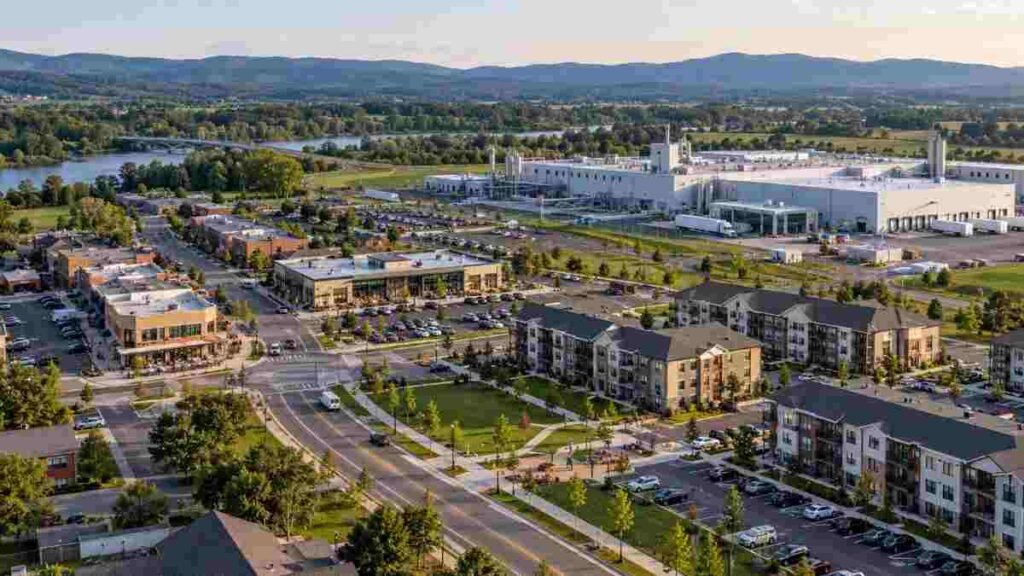
Quick Answer: Contemporary industrial workers look for modern apartment amenities like high-speed fiber internet, energy-efficient appliances, in-unit laundry, and professional property management.
Advanced manufacturing is no longer the dusty, manual labor of decades past. Today’s facilities operate with high-tech automation, requiring skilled computer operators, electrical engineers, and precision mechanics who expect high-quality living environments.
To achieve effective manufacturing talent attraction, rural communities must offer housing options that rival suburban rental standards. Key desired features include:
- Reliable Connectivity: Dedicated fiber-optic internet for remote reporting, online training, and personal streaming.
- Energy Efficiency: Modern insulation and HVAC systems that keep utility bills predictable during seasonal temperature shifts.
- Lifestyle Amenities: In-unit laundry, pet-friendly policies, dedicated parking, and well-maintained outdoor community spaces.
4. How Local Housing Keeps Factory Wages in the Community
Quick Answer: Developing local workforce apartments ensures factory payroll stays within the host municipality, boosting local retail sales, restaurant revenues, and municipal tax bases.
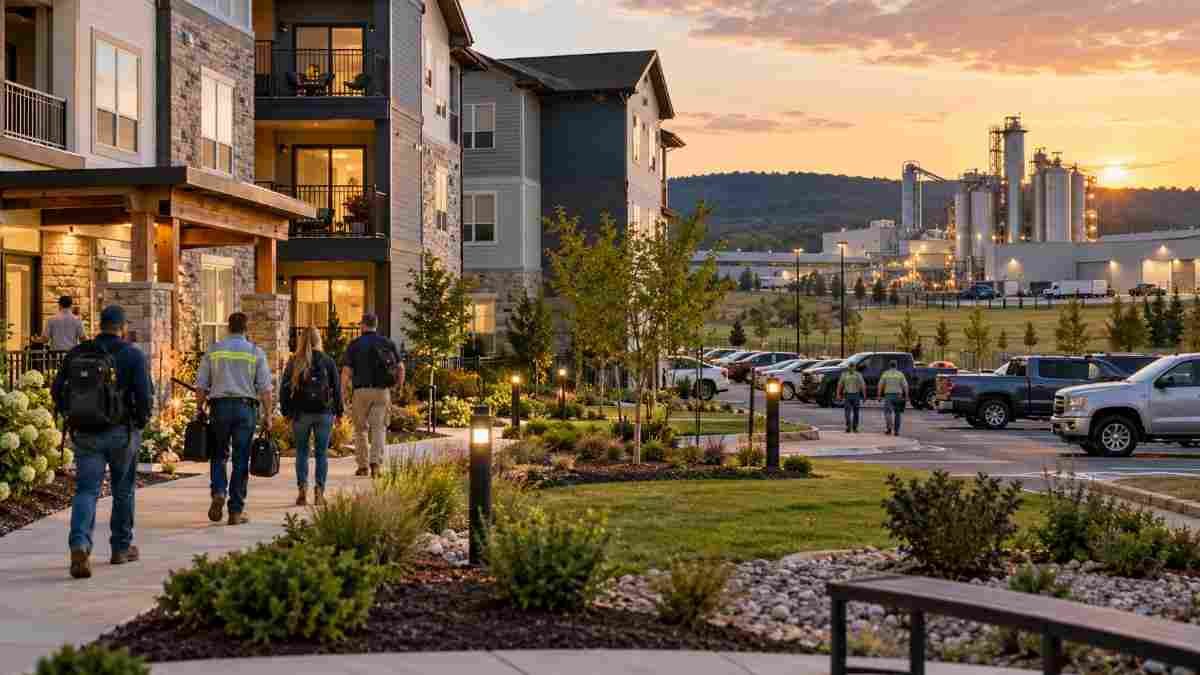
When a rural factory opens without adequate nearby housing, employees are forced to commute from larger regional hubs 45 to 60 minutes away. Known as “out-commuting,” this pattern severely dilutes the localized economic benefits of an industrial investment.
Workers who commute long distances spend their paychecks on groceries, dining, gas, and entertainment in the neighboring cities where they reside. By building modern apartments adjacent to industrial corridors, rural municipalities capture local sales tax, support small business growth, and build a stronger tax base to fund local schools and emergency services.
5. Overcoming Development Barriers with Specialized Financing
Quick Answer: Government-backed loan programs overcome low rural property appraisals and conservative bank lending by providing long-term, fixed-rate financing for rural multi-family projects.
Building modern apartment complexes in smaller markets presents distinct financial hurdles. Traditional commercial lenders are often hesitant to fund rural multi-family developments due to conservative appraisal models and a lack of local “comparable” apartment properties.
To bridge this capital gap and encourage rural multifamily housing financing, real estate developers leverage specialized federal credit programs. Securing a USDA 538 loan for multifamily construction allows developers to access low-interest, long-term fixed-rate financing designed specifically to encourage multi-family housing development in qualifying rural towns. These credit enhancements reduce developer risk, lowering rent barriers for local workers while ensuring projects remain financially viable.
6. Myth vs. Fact: Rural Rental Housing Misconceptions
Clearing up common misconceptions helps local leaders recognize that modern apartment communities enhance rural property values and attract long-term residents:
| Misconception | Economic Reality |
| “Rural residents only want single-family homes.” | Demand for quality rental units in rural areas often outpaces supply, particularly among young professionals, healthcare workers, and retirees. |
| “Apartment buildings lower surrounding property values.” | Professionally managed, modern multi-family communities increase local tax revenues and elevate overall neighborhood appeal. |
| “Factories should build their own worker housing.” | Manufacturing companies specialize in production, not property management; private developers are best equipped to build and maintain housing assets. |
7. Action Plan for Rural Municipalities and Industrial Developers
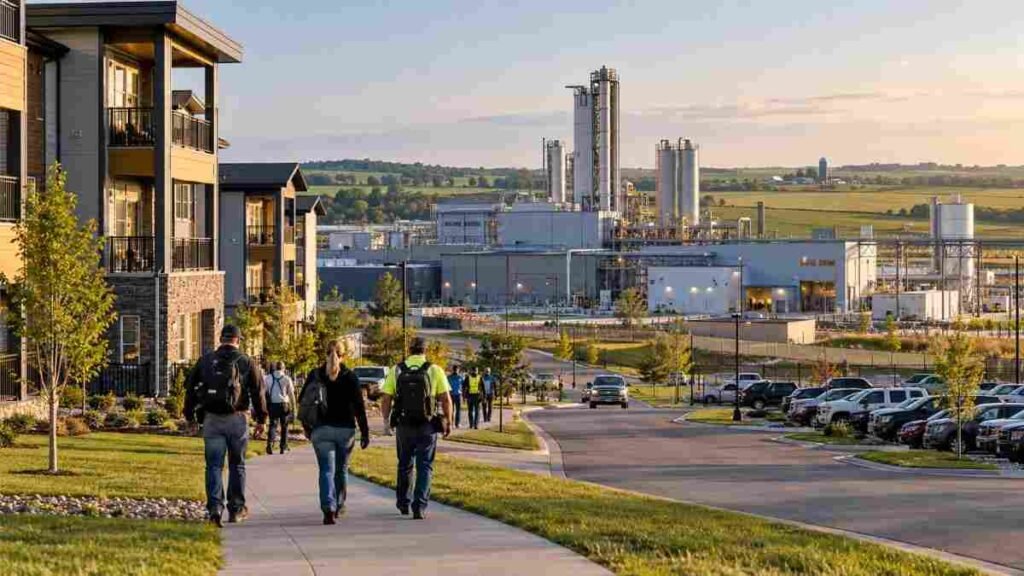
Use this strategic checklist to align housing development with factory expansion timelines:
- Conduct a Housing Needs Assessment: Measure current local vacancy rates alongside projected factory hiring numbers over the next 3 to 5 years.
- Update Zoning Codes: Ensure local land-use plans permit high-density multi-family developments near major transportation corridors.
- Extend Municipal Utilities: Pre-fund water, sewer, and road infrastructure to shovel-ready housing parcels near industrial sites.
- Establish Local Tax Incentives: Offer temporary tax abatements or land write-downs to attract experienced workforce housing developers.
- Engage Specialized Lenders: Partner with financial institutions experienced in rural development programs to secure competitive capital terms.
Rural manufacturing growth and modern housing development are two sides of the same economic coin. A state-of-the-art production facility cannot thrive without a stable, local workforce, and a workforce cannot settle without accessible, high-quality places to live. By recognizing modern multi-family housing as essential economic infrastructure, rural communities and industrial leaders can work together to build thriving, sustainable regional economies for generations to come.