10 Proven Strategies On How to Increase Student Engagement in High School PE
Only 25% of American high school students get at least 60 minutes of physical activity daily, according to the CDC’s 2025 Youth Risk Behavior Survey. The problem extends beyond exercise habits: traditional physical education classes can leave students feeling excluded, embarrassed, or disconnected from activities they rarely enjoy.
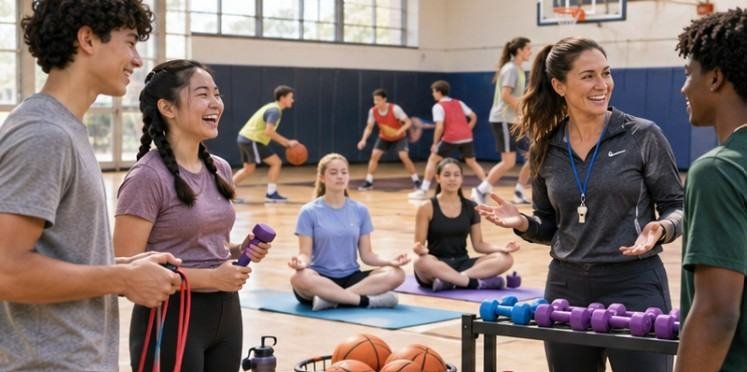
Understanding how to increase student engagement in high school pe requires more than introducing exciting games. Teachers must create environments where teenagers feel comfortable participating, developing skills, and making meaningful decisions.
The most effective approach combines student choice, inclusive instruction, active learning, and personal fitness goals.
1. Give Students Genuine Choices in Physical Activities
Student choice is one of the simplest ways to make physical education more appealing.
Instead of requiring everyone to participate in basketball, offer several activities targeting similar learning outcomes. Students might select recreational basketball, strength training, or cardiovascular circuits.
Use Interest Surveys to Shape Lessons
Conduct brief anonymous surveys at the beginning of each semester. Ask students which activities interest them, what challenges discourage participation, and what fitness skills they want to develop.
Use responses to introduce activities such as Pilates, badminton, yoga, dance fitness, hiking preparation, or resistance training.
Choice should remain structured. Every option must support curriculum objectives while allowing students to explore personal interests.
2. Replace Large Games With Small-Group Activities
Traditional full-court games often create unequal participation. Skilled players dominate possession while less-confident classmates receive few meaningful opportunities.
Small-sided games address this problem by increasing involvement.
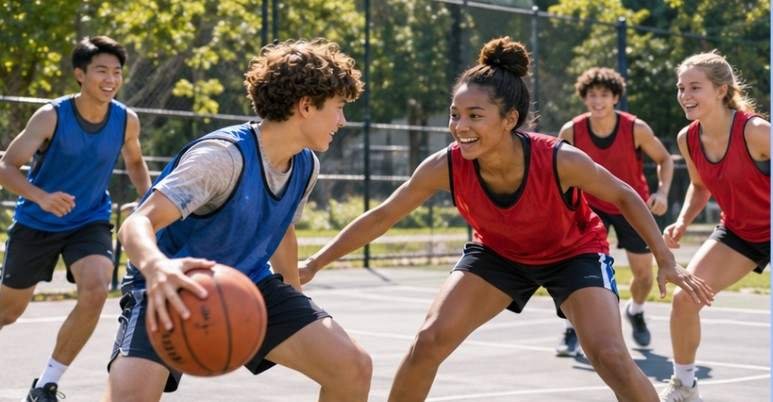
A basketball lesson could feature several three-on-three games instead of one full-class competition. Smaller teams create additional passing, shooting, and decision-making opportunities.
Teachers can also rotate positions and establish participation rules to distribute involvement fairly.
The CDC’s guidance on quality physical education recommends students engage in physical activity for at least 50% of instructional time.
Reducing waiting periods helps schools work toward that benchmark.
3. Start Every PE Class With Immediate Movement
The opening minutes of a PE lesson influence participation throughout the session.
Long attendance procedures and extended explanations can reduce momentum before students begin exercising.
Instead, prepare an accessible activity students can start immediately after entering the gym.
Possible options include dynamic stretching, walking challenges, partner passing exercises, or short movement circuits.
Display instructions before class and take attendance while students complete safe, familiar activities.
These routines establish predictable expectations and maximize instructional time without sacrificing organization.
4. Make Physical Education Inclusive for Different Abilities
Students enter high school with widely different physical abilities, athletic experiences, disabilities, and confidence levels.
Uniform expectations can unintentionally discourage participation.
Adapt Equipment and Competition Levels
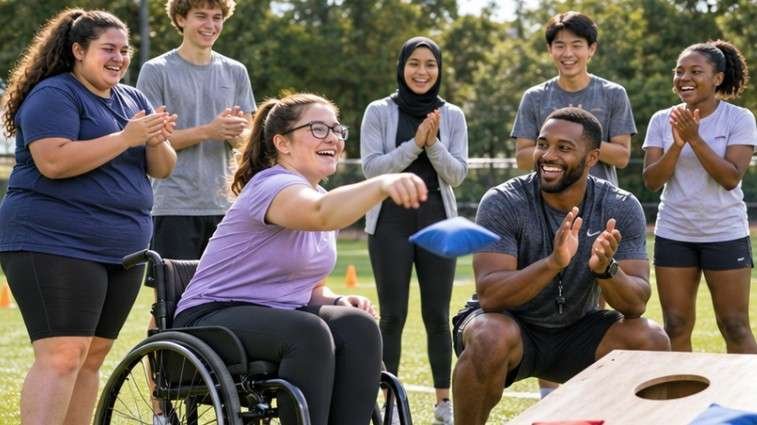
Use softer balls, adjustable targets, modified court dimensions, and alternative grips when appropriate.
Teachers can also establish recreational and competitive activity groups, allowing students to participate at suitable intensity levels.
However, flexible grouping should never become permanent ability tracking. Students deserve opportunities to improve and explore more challenging activities.
Adaptations should also follow individual education plans, accommodation requirements, and relevant school policies.
The goal is equal access to meaningful learning, not identical performance.
5. Address Body Image Concerns and Participation Anxiety
Adolescence brings heightened awareness of appearance, peer judgment, and athletic performance.
The American Academy of Pediatrics identifies body image pressures as an important concern during teenage development.
PE teachers should recognize that students avoiding activities may be experiencing genuine discomfort rather than refusing to cooperate.
Private conversations can help identify barriers without embarrassing students publicly.
Offer supportive alternatives, including independent basketball practice, individual fitness stations, or gradual participation in group exercises.
Avoid public fitness rankings, body-focused criticism, and comparisons between classmates.
A respectful learning environment makes participation feel safer.
6. Connect Physical Activities to Real-Life Fitness
Teenagers are more likely to value physical education when they understand its practical relevance.
Explain how strength training supports everyday movement, flexibility improves mobility, and cardiovascular exercise contributes to long-term health.
The U.S. Department of Health and Human Services recommends that children and teenagers ages 6–17 accumulate at least 60 minutes of daily physical activity.
Schools can support this goal by teaching activities students can continue independently.
Introduce lifetime fitness options such as cycling, walking programs, swimming, yoga, and recreational sports.
Connecting lessons with personal interests helps students view exercise as a useful life skill rather than another school requirement.
7. Give Students Leadership and Decision-Making Roles
Student involvement improves when teenagers become active contributors rather than passive participants.
Assign rotating responsibilities such as team organizer, warm-up leader, equipment manager, referee, or peer coach.
During small-group activities, students can practice self-officiating and resolve minor disagreements respectfully.
These opportunities strengthen communication, accountability, and collaborative problem-solving.
Leadership assignments should remain accessible to everyone, including students who are not confident athletes.
Importantly, management responsibilities should supplement physical participation rather than repeatedly replace exercise time.
8. Replace Performance Comparisons With Personal Progress
Traditional grading practices sometimes reward athletic ability more than learning.
A student with limited sports experience may work consistently yet struggle to match an experienced athlete’s performance.
Instead, evaluate improvement, skill development, decision-making, and understanding of fitness principles.
The professional organization SHAPE America emphasizes standards-aligned assessment, differentiated instruction, and ongoing monitoring of student learning.
Students might track improvements in movement technique, cardiovascular endurance, or exercise planning.
Avoid making body weight, appearance, or natural athletic talent the basis of grades.
When progress becomes personal, students have achievable reasons to continue improving.
9. Use Technology Without Reducing Movement Time
Technology can make fitness education more interactive when applied thoughtfully.
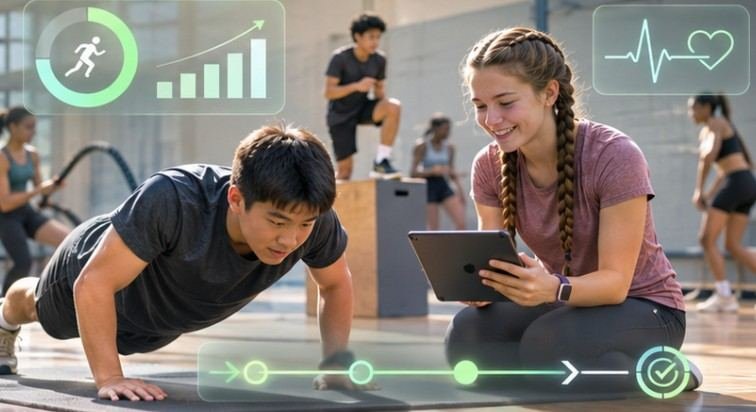
Students might use timers for circuit training, step counters for walking challenges, or digital journals to reflect on progress.
However, excessive screen-based instruction can reduce valuable activity time.
Schools should also maintain clear expectations around digital access, movement between learning spaces, and student supervision.
For example, understanding how Securly Pass supports school hallway management can help educators consider student movement procedures alongside broader school safety practices.
Technology should support learning and supervision without becoming a substitute for physical activity.
10. Measure Engagement Instead of Assuming Students Are Interested
Teachers cannot reliably evaluate participation simply by observing whether students appear busy.
A more useful approach combines physical activity time, student feedback, and skill development.
A Simple Two-Week PE Engagement Audit
During the first week, record how much instructional time students spend actively moving. Count students waiting for equipment, standing in lines, or remaining uninvolved.
Next, gather anonymous feedback about activity preferences, confidence, and perceived inclusion.
During the second week, introduce student-selected activities, smaller groups, and modified equipment.
Compare both weeks using the same measures.
For example, increasing average active time from 18 to 26 minutes in a 45-minute lesson raises the active-time proportion from 40% to approximately 58%.
That improvement would exceed the commonly recommended 50% activity-time benchmark, although movement time alone does not establish instructional quality.
Frequently Asked Questions
1. What is the fastest way to increase participation in high school PE?
Introduce small-group games, eliminate unnecessary waiting time, and provide structured activity choices. These changes can create more opportunities for students to participate immediately.
2. How can teachers motivate students who dislike sports?
Offer individual fitness activities, connect movement with personal interests, and evaluate individual improvement rather than athletic ability or competitive success.
3. What activities work best for inclusive high school PE?
Walking circuits, modified team games, badminton, yoga, dance fitness, and resistance training can accommodate different interests and abilities when properly adapted.
4. How should teachers measure PE engagement?
Combine observations of active participation, student feedback, skill improvement, and inclusion. Track changes over several lessons rather than relying on one class.
Building a PE Program Students Want to Join
Increasing engagement begins with recognizing that meaningful participation looks different for every teenager.
Some students thrive in competitive games, while others develop confidence through individual fitness goals or recreational activities. Strong physical education programs make room for both experiences.
Teachers should prioritize movement, meaningful choice, supportive relationships, and measurable progress while maintaining high expectations for learning.
Small instructional adjustments can transform how students experience physical education.
The ultimate measure of success is not whether teenagers complete today’s lesson. It is whether they leave with the confidence, knowledge, and motivation to remain active long after graduation.