Inquiry-Based Learning Activities That Get High School Students Thinking
I want students to leave a lesson with more than answers they memorized. I want them asking better questions, examining evidence, and explaining why their conclusions make sense. That’s why I value inquiry based learning activities for high school students that connect academic content with issues teenagers recognize.
A cafeteria waste problem, conflicting historical accounts, or a questionable online claim can become a meaningful investigation. The key is giving students enough structure to investigate independently while keeping evidence at the center.
What Makes an Activity Inquiry Based?
Inquiry begins with a question students investigate through observation, research, experimentation, or analysis. They develop an answer, evaluate evidence, and revise their thinking.
A poster or debate alone does not establish inquiry. Students need a defensible connection between their question, investigation, and conclusion. By guiding students to harness mistakes as opportunities to reassess evidence and refine their reasoning, teachers can deepen the inquiry process.
Start beginners with guided inquiry: provide the question and initial resources while students make decisions about analysis. Increase independence as their research skills develop.
10 Activities for High School Classrooms

The suggested durations below are planning estimates. Adjust them for reading levels, available materials, and class schedules.
1. Investigate Heat Around Campus
Ask: “Which school surfaces retain the most heat?”
During two class periods, students compare temperatures near grass, pavement, shaded areas, and buildings. Provide suitable thermometers and establish safe measurement locations.
Students graph results, discuss variables, and recommend improvements. Assess whether their explanations acknowledge measurement limitations instead of assuming one reading proves a pattern.
2. Audit Cafeteria Food Waste
Ask: “What could our school change to reduce lunch waste?”
With cafeteria staff approval, students collect anonymous waste measurements across several lunches. They calculate averages and compare categories.
Their final product is a recommendation supported by graphs. Require students to distinguish measured findings from assumptions about why classmates discard food.
3. Investigate a Viral Claim
Ask: “Does the original evidence support this claim?”
Provide an age-appropriate social media post and time to locate its original source. Students examine dates, missing context, author expertise, and independent reporting.
In one or two periods, they produce a short verification report. Assess their source evaluation and willingness to describe uncertainty.
4. Compare Local Historical Accounts
Ask: “Why do accounts of the same local event differ?”
Select newspaper archives, photographs, letters, or public records about a community event. Students examine each source’s purpose, perspective, and historical context.
Over several lessons, they develop an argument explaining agreements and contradictions. Evaluate corroboration and reasoning rather than the number of quotations included.
5. Examine a School Policy
Ask: “What evidence should guide a proposed school policy?”
Students might investigate phone rules, recycling procedures, or library access. Provide current policy documents and contrasting perspectives.
Teams write a policy brief that considers benefits, trade-offs, and counterarguments. Keep proposals realistic and distinguish evidence from personal preference.
6. Test a Literary Interpretation
Ask: “Which explanation best accounts for a character’s decision?” Then connect classroom lessons to real world problems by asking students how similar choices might affect people in their own communities.
Using a shared short story, students develop competing interpretations and gather textual evidence. Partners challenge explanations with passages that complicate the argument.
This can fit one extended period. Assess how effectively students connect evidence to interpretation and respond to alternatives.
7. Explore Community Transportation
Ask: “How accessible is our community without a car?”
Students examine public transit maps, sidewalks, travel times, and access to community facilities. Use public information or teacher-provided materials.
Across two or three lessons, groups create an accessibility proposal. Require clear criteria and discussion of whose needs their analysis represents.
8. Analyze Advertising Techniques
Ask: “How do advertisements persuade teenagers?”
Students compare a small collection of advertisements, identifying emotional appeals, visual choices, and factual claims.
They annotate examples and develop an evidence-based explanation of persuasive techniques. Assess the analysis of messaging without assuming an advertisement affects every viewer identically.
9. Investigate Water Quality Data
Ask: “What can local water data tell us—and what can’t it?”
Provide public water reports or an appropriate classroom dataset. Students identify trends, examine units, and formulate follow-up questions.
Their output is a scientific explanation with stated limitations. Avoid conclusions about drinking-water safety based on informal classroom testing.
10. Investigate a Community Story
Ask: “Whose experiences are missing from our local history?”
Students compare existing accounts with approved interviews or archived oral histories. Establish consent procedures and offer an archive-only alternative.
Over a week, students create a short podcast or written profile. Assess historical context, accurate representation, and source documentation.
How to Manage Inquiry Within a Class Period
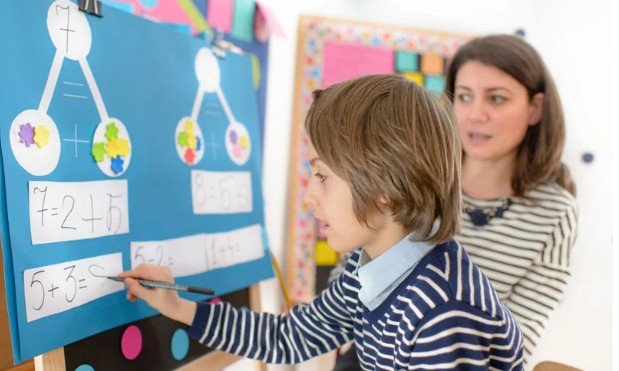
For a 50-minute lesson, consider five minutes for an opening image or problem, eight for refining questions, twenty for investigation, twelve for explanation, and five for reflection.
Model one useful research move before students begin. During conferences, ask, “What evidence supports that?” or “What might change your answer?”
Longer projects need checkpoints for question approval, source review, preliminary findings, and revision.
How to Support and Assess Students
Provide accessible text sets, vocabulary previews, graphic organizers, and sentence starters. Offer varied ways to communicate findings while maintaining consistent expectations for reasoning.
Assign group roles, but collect an individual explanation or reflection to make each student’s learning visible.
Use a simple rubric covering question quality, evidence selection, reasoning, and reflection. Reward thoughtful revision when evidence challenges an initial idea.
Frequently Asked Questions
1. What are effective inquiry based learning activities for high school students?
Effective activities include source investigations, campus measurements, policy analysis, and literary interpretation. Each requires students to investigate a question and explain an answer using relevant evidence.
2. Can inquiry fit into one lesson?
Yes. Limit the question, provide a manageable source collection, and require a short explanation. Broader questions and original data collection usually require additional time.
3. How much guidance should teachers provide?
Match guidance to students’ knowledge and research experience. Beginners benefit from curated sources, modeled analysis, and checkpoints before taking greater responsibility for investigation design.
Bringing Curiosity Into Everyday Lessons
I would begin with one manageable question rather than redesign an entire course. The most useful inquiry based learning activities for high school students make thinking visible through evidence, explanation, and revision.
When I plan inquiry, I focus on what students will investigate, how I will support them, and what their final explanation should demonstrate. That keeps curiosity connected to meaningful learning.