How to Modernize Your Home’s Exterior: A Complete Step-by-Step Guide
Updating a home’s exterior changes how a property looks from the street while strengthening protection against the elements. Over decades of exposure to sun, snow, wind, and rain, siding fades, trim cracks, and outdated architectural features make an otherwise sturdy structure appear tired.
Modernizing a facade does not mean erasing the residence’s original character. Instead, it involves pairing clean lines, durable cladding, contemporary lighting, and upgraded windows to bring harmony and efficiency to the exterior envelope. Approaching a residential facade makeover through clear phases prevents costly mistakes and ensures every design choice adds lasting visual appeal and property value.
1. Assessing Architectural Proportions and Existing Materials
Every successful exterior renovation starts with a thorough review of the structure as it stands today.
Identifying Structural Strengths and Problem Areas
Walk the perimeter of the house and note where the eye naturally lands. Look at roof pitches, window placements, foundation lines, and front entryways. Identify areas showing water damage, peeling paint, warped siding, or rotting trim boards. Addressing structural wear before installing new finishes ensures that cosmetic upgrades rest on a solid, weatherproof base.
Respecting Core Home Geometry
Modernizing an older property works best when new design elements complement the underlying silhouette of the roof and walls. A steep gable roof pairs naturally with vertical board-and-batten siding and clean rectangular trim, whereas a low-slung ranch profile shines with horizontal cladding, deep eaves, and wide, unobstructed window openings. Forcing conflicting architectural styles onto an existing frame often creates an awkward, disjointed appearance.
2. Selecting Contemporary Cladding and Color Palettes
Replacing or refinishing primary wall surfaces establishes the visual foundation for the entire facade.
Combining Complementary Exterior Textures
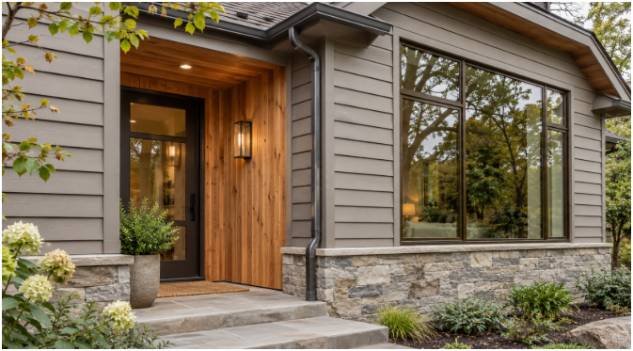
Modern residential exteriors rely on balanced material contrast rather than covering every wall in a single uniform finish. Pairing smooth fiber cement lap siding with natural cedar accents, textured stone veneer, or matte metal panels creates visual depth and architectural interest—factors that rank high among essential considerations for property developers aiming to boost curb appeal and long-term resale value. Keep material transitions logical by anchoring stone along lower foundation walls or framing recessed entryways in warm wood tones.
Choosing Cohesive, Timeless Color Schemes
Move away from dated, overly busy multi-color trim schemes in favor of restrained palettes built around two or three coordinated shades. Neutral earth tones, warm grays, deep charcoals, and crisp off-whites provide a clean backdrop that allows architectural shadows and greenery to stand out, especially when you are exploring ways to create a low-maintenance garden around your home’s foundation. Use a slightly darker or lighter shade on window casings and fascia boards to define clean edges without creating jarring visual clutter.
3. Upgrading Windows and Entryways for Clean Lines

Windows and front doors act as the focal points of any residential facade, shaping both curb appeal and indoor comfort.
Replacing Dated Frames with Expansive Panes
Old windows divided by bulky muntin grids or yellowed vinyl frames can make a house feel closed off and dated. Swapping them for slim-profile frames in dark bronze, black, or anodized aluminum immediately sharpens the exterior aesthetic while bringing more natural daylight inside. Homeowners planning exterior updates in northern mountain valleys often seek out custom residential glass in Logan, UT to install energy-efficient double- or triple-pane units capable of withstanding cold winter temperatures while framing panoramic views cleanly.
Designing a Welcoming Modern Front Door
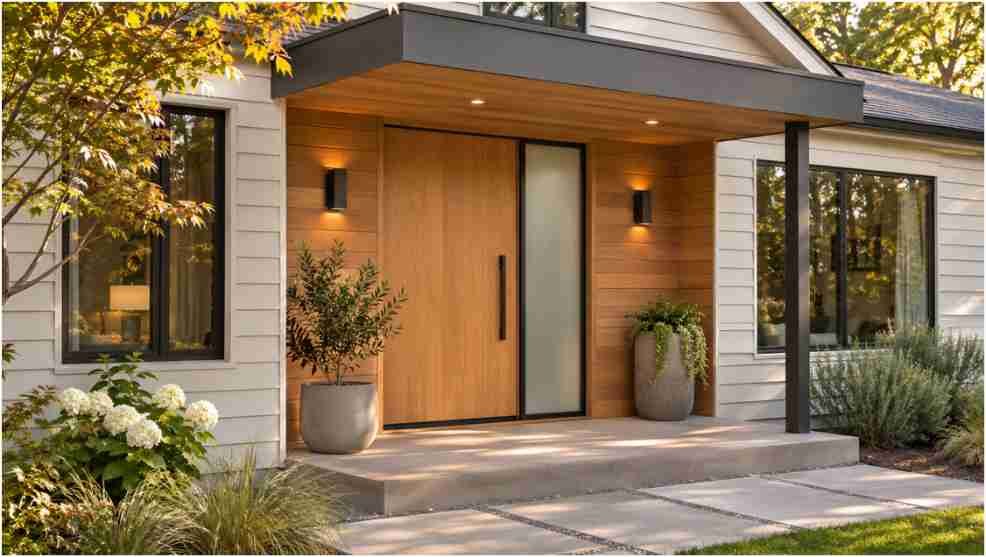
The front entrance should draw guests toward the home naturally. Replace ornate, heavily carved wooden doors with flush wood panels, frosted vertical glass lites, or sleek fiberglass doors finished in rich natural stains or bold accent colors. Pair the new door with minimalist matte hardware, modern house numbers mounted vertically, and a clean-lined porch canopy or overhang.
4. Integrating Layered Exterior Lighting
Thoughtful illumination extends curb appeal into the evening hours while improving safety along walkways and steps.
Balancing Architectural and Pathway Fixtures
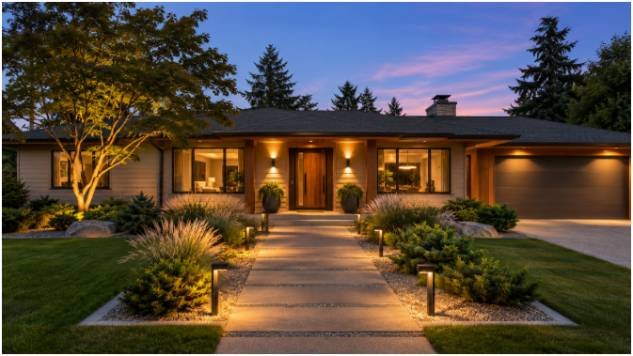
Avoid relying on a single harsh floodlight mounted above the garage door. Instead, layer warm-toned LED fixtures across the facade. Install sleek upward-and-downward wall sconces flanking the front entry and garage doors to wash exterior textures in soft light. Add low-voltage path lights along front walkways and subtle uplights beneath specimen trees to create depth after sunset.
Selecting Durable, Weather-Rated Hardware
Choose exterior light fixtures built from powder-coated aluminum, solid brass, or marine-grade stainless steel to resist rust and corrosion. Opt for warm color temperatures between 2700K and 3000K so the home glows invitingly rather than casting a cold, clinical glare across the front yard.
5. Finishing with Garage Doors and Hardscaping
Secondary exterior features often occupy a large share of street-facing square footage and deserve equal design attention.
Updating Prominent Garage Doors
On many suburban homes, the garage door accounts for nearly forty percent of the front facade. Replacing a standard stamped steel door with a contemporary flush-panel design, frosted glass inserts, or faux-wood composite planks transforms the entire street view immediately—and prioritizing outdoor maintenance tasks every homeowner should know, like lubricating tracks and checking weatherstripping, ensures that upgrade stays smooth and weather-tight for years. Match the garage door color to the primary siding or entry accents so it blends seamlessly with the rest of the architecture.
Framing the Facade with Clean Hardscaping
Complete the makeover by updating cracked concrete walkways and overgrown foundation shrubs. Replace curved, cluttered planting beds with crisp geometric stone borders, permeable pavers, ornamental grasses, and structured evergreens. Clean hardscaping ties the renovated house into the surrounding lot, delivering a polished, cohesive transformation from the curb to the front door.